8 Custom Fashion Merchandise Categories French E-Commerce Stores Are Stocking in 2026
Why French Online Retailers Are Doubling Down on Custom Merchandise
Fashion already accounts for more than 21% of total French e-commerce spending, and the market shows no sign of plateauing. The French fashion e-commerce market is estimated at USD 23.66 billion in 2026 and is projected to reach USD 56.36 billion by 2032, growing at a 13.2% compound annual rate. That trajectory is pushing online retailers to stop competing on price alone and start building product lines that carry their own identity.
Custom merchandise is one of the clearest answers to that pressure. More than 55% of consumers say they prefer customized garments over mass-produced alternatives, and online sales of custom clothing have grown 70% over the last three years. For a French e-commerce brand trying to stand out on Amazon.fr, Cdiscount, or its own Shopify storefront, a well-executed custom product does work that no paid ad can replicate — it keeps the brand visible on the street, in the metro, at the café.
The categories below are the ones actually moving for French online retailers in 2026. Each one maps to a real consumer trend and a practical sourcing opportunity. If you’re sourcing custom fashion merchandise for an e-commerce store serving France, this is where to focus.
1. Embroidered Baseball Caps and Structured Dad Hats
Headwear is the single most versatile branded item in fashion merchandise. A well-embroidered cap works as a standalone fashion product, a brand-building tool, and a high-margin SKU that doesn’t require sizing runs the way apparel does. French consumers have demonstrated consistent appetite for accessories that express individual style, and caps sit at the intersection of streetwear, outdoor culture, and everyday casual dressing.
For sourcing, embroidery quality matters enormously here. Unlike screen-printed transfers, embroidered logos are tactile, dimensioned, and don’t crack or fade with washing — attributes that translate directly into consumer perception of premium quality. Brands sourcing custom caps at scale need a manufacturer with dedicated headwear expertise and on-site quality control, not a generalist catalog supplier.
Headwind Group’s custom headwear manufacturing operation in Bangladesh produces baseball caps, trucker hats, and structured styles with sample lead times of one to two weeks and production runs of two to six weeks. Their factory stocks certified non-Chinese cotton and operates with over 30 on-site QC inspectors across Asia — which matters when you’re shipping branded merchandise to a market as quality-conscious as France.
2. Custom Hoodies and Branded Sweatshirts
Seasonal demand for hoodies in France spiked by 965% in recent sourcing data, and year-round demand has held steady as athleisure and everyday casual dressing continue to blur the line between workwear and streetwear. Hoodies are now worn in office environments, at events, and during everyday errands — which means each branded item generates more impressions per week than virtually any other wearable category.
For French e-commerce stores, the hoodie is probably the highest-volume custom apparel opportunity right now. The key sourcing decision is decoration method: embroidery carries a premium perception that screen printing can’t match, but it requires a manufacturer with the digitization capability to translate brand logos into clean stitch patterns. Brands that get this right — quality construction, accurate color matching, consistent sizing — tend to see strong repeat purchase rates and positive user-generated content on TikTok and Instagram, which are the primary discovery formats for this category in France.
The global custom-made clothes market is valued at USD 63.82 billion in 2026 and is on track to nearly triple to USD 179.49 billion by 2033. French online retailers who build a recognizable hoodie or sweatshirt into their product catalog now are positioning early in a category with significant upside.
3. Branded Tote Bags and Canvas Shoppers
The tote bag is arguably the defining fashion accessory of the current decade in France. Eco-consciousness is a genuine purchasing driver for French consumers — around 70% of French e-shoppers favor retailers offering sustainable choices — and a well-made canvas or organic cotton tote signals brand values before the customer even opens it.
Beyond sustainability signaling, tote bags carry practical advantages for e-commerce merchandising: no sizing complexity, low return rates, high perceived value relative to production cost, and strong gifting appeal. French consumers increasingly look for distinctively fashionable accessories to match their outfits and express individual style, and a clean branded tote — especially one with quality printing or embroidery — fits that brief.
For stores sourcing at volume, the bag manufacturing category is worth treating seriously rather than as an afterthought. Construction quality (stitching at stress points, handle attachment, fabric weight) is what separates a tote that gets used daily from one that ends up at the bottom of a drawer. Headwind Group’s bag manufacturing capability spans totes, backpacks, and cooler bags produced across their Asia factory network, with the same 100% replacement guarantee that covers their headwear line.
4. Custom Beanies and Cold-Weather Headwear
France’s seasonal retail calendar creates predictable demand spikes for cold-weather accessories, and beanies are one of the cleaner opportunities in the custom merchandise space. They carry no sizing complexity beyond a basic one-size-fits-most construction, they photograph well for e-commerce listings, and they’re the kind of item French consumers buy as gifts — which extends the selling window beyond personal purchase intent.
The streetwear influence on French fashion has made the beanie a year-round item in many urban markets, particularly among the Gen Z and millennial demographics that account for a growing share of mobile fashion purchases. Social commerce and second-hand platforms are strongly supporting fashion growth in France, and branded beanies tend to show up in user-generated content in ways that more utilitarian products don’t.
Sourcing beanies requires attention to yarn weight, knit construction, and label placement. A 144-piece minimum order quantity is a reasonable entry point for testing a custom beanie SKU before committing to a larger run — which is exactly the kind of flexibility that separates a serious manufacturing partner from a bulk catalog supplier.
5. Custom Polo Shirts and Branded Apparel Basics
Men’s fashion is identified as a key high-growth category for 2026 in the French market, with increased supplier activity around quality cotton garments and classic silhouettes. The polo shirt sits at the center of this trend: it reads as smart-casual in French professional culture, works across age demographics, and carries embroidery well on the chest or sleeve.
For e-commerce brands, the polo is a strong candidate for a ‘signature’ product — one SKU that anchors a collection and communicates brand positioning clearly. French shoppers are becoming more sophisticated, demanding clear information, fair pricing, and reliable service. A polo shirt with a well-executed embroidered logo, consistent sizing, and honest product photography tends to perform better in this market than a dozen undifferentiated basics.
Branded apparel has matured into a genuine brand touchpoint. According to PPAI research, apparel has overtaken writing instruments to become the number one promotional product category acquired by consumers — a shift that reflects how seriously buyers now take wearable merchandise as a brand-building investment.
6. Recycled and Sustainable Merchandise (rPET Bags, Organic Cotton Apparel)
Sustainable fashion is not a niche preference in France — it’s a mainstream expectation. The growing trend toward sustainable fashion is escalating French fashion e-commerce market demand, and consumers increasingly want evidence of ethical production, not just marketing language about it.
For online retailers, this creates a concrete sourcing requirement: products made from certified recycled or organic materials, with documentation to back the claims. rPET bags — made from recycled plastic bottles — are one of the most commercially accessible sustainable merchandise categories. They carry a clear environmental story, they’re durable enough for daily use, and they photograph well against the kind of clean-background e-commerce imagery that French shoppers expect.
Organic cotton apparel (t-shirts, lightweight hoodies, tote bags) is the other major category here. The key is certification: buyers in France are increasingly skeptical of vague sustainability claims, and a GOTS-certified or OEKO-TEX labeled product carries meaningfully more credibility than one with generic ‘eco-friendly’ copy. Headwind Group’s rPET bag line is manufactured from recycled materials and is fully recyclable, with the company holding sustainability certifications that support the supply chain documentation French retailers may need for compliance and marketing purposes.
7. Custom Tech Accessories and Branded Utility Items
France has over 50 million active online shoppers, with 94% internet penetration and one of the strongest mobile commerce cultures in Europe. That digital saturation creates consistent demand for tech-adjacent accessories — phone wallets, cable organizers, custom laptop sleeves, branded power banks — that blend utility with brand visibility.
For e-commerce stores, tech accessories occupy an interesting position: they’re bought as gifts, they’re used daily, and they sit at a price point that allows healthy margins without the return-rate risk that apparel carries. High return rates remain a genuine challenge in French fashion e-commerce, often due to sizing discrepancies and unmet expectations. Tech accessories sidestep most of those friction points entirely.
The category rewards specificity. A generic branded phone wallet is forgettable. A well-designed one — with thoughtful material choice, a clean logo application, and packaging that matches the brand’s visual identity — becomes part of how a customer experiences the brand every day. That’s the kind of merchandise that generates organic social content without a paid campaign behind it.
8. Custom Backpacks and Functional Fashion Bags
Backpacks occupy a sweet spot between fashion and function that French consumers respond to strongly. Clothing and footwear dominate cross-border shopping at 42% of purchases, but bags are a close companion category — and the backpack in particular has moved well beyond its utilitarian origins into everyday fashion territory.
For e-commerce brands, the backpack is a high-AOV (average order value) product that justifies a premium price point when construction quality is visible. French shoppers read product pages closely and expect detailed specifications and high-resolution photos — which means the quality of the product itself, and the quality of how it’s presented online, both matter. A custom backpack with branded hardware, quality zippers, and a padded laptop compartment tells a different story than a basic drawstring bag.
Sourcing custom backpacks requires a manufacturer with genuine bag construction expertise — not just a factory that treats bags as a secondary category. Lead times, MOQs, and sample quality vary significantly across suppliers, and the French market’s expectation of reliable, trackable delivery means the supply chain behind the product needs to be as solid as the product itself.
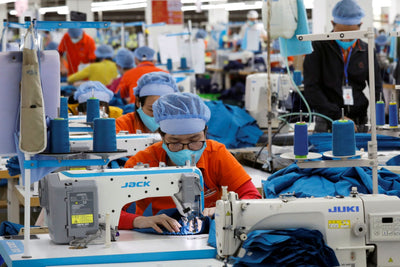
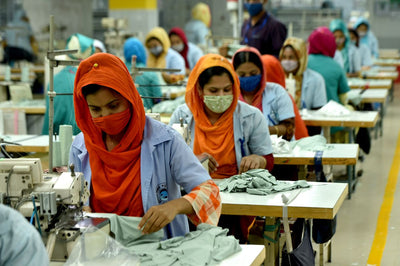
A note on sourcing: Most of the categories above share a common sourcing challenge — finding a manufacturer who can handle custom branding, consistent quality control, and the documentation requirements of selling into the EU, all without a 6-month lead time. Headwind Group has been manufacturing headwear, bags, and apparel for e-commerce brands and retailers since 1980, with factories and QC teams across Bangladesh, Vietnam, Myanmar, India, and China. Their 24-hour quote turnaround and 100% replacement guarantee are practical advantages for brands that need to move quickly and can’t afford defect-related inventory problems. If you’re building a custom fashion merchandise line for the French market, it’s worth starting the conversation early — samples can be made within two to three weeks on average, and production runs of two to six weeks are standard for most categories.