
A three-metre teddy bear that packs flat
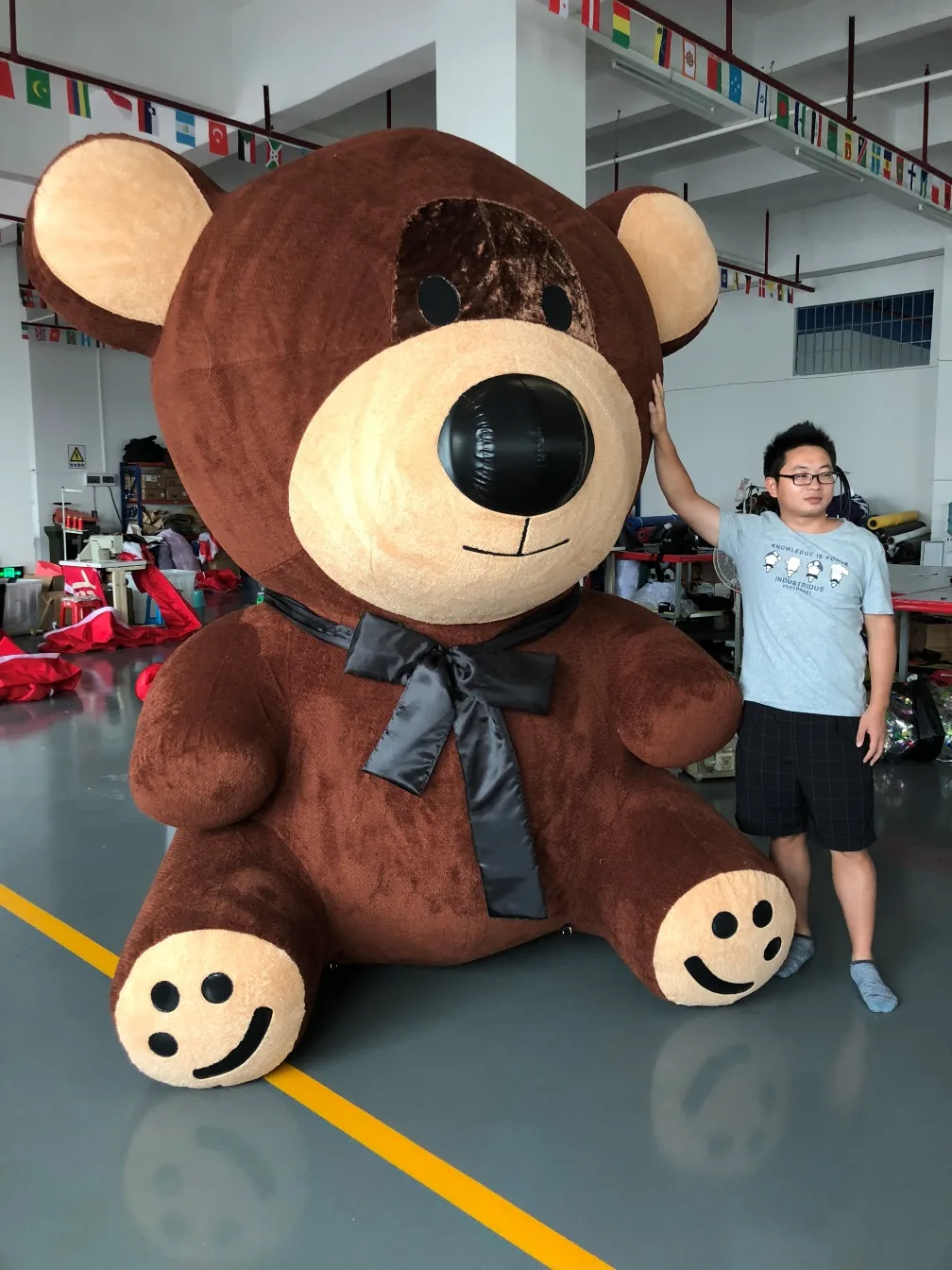
We are looking into bringing one gigantic plush teddy to Japan by the middle of October, to use as a photo spot. Size three to four metres. Is the timing even possible?The brief, from Ubisoft — Tuesday 7 August 2018
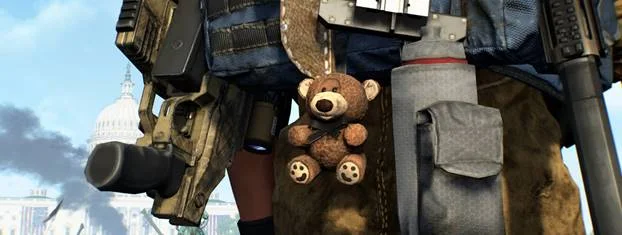
- 01 The reference. Tommy the Teddy Bear, clipped to Agent Johnson's go-bag in The Division 2.
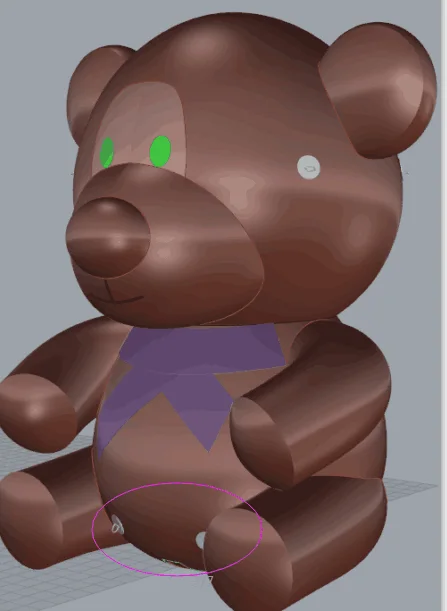
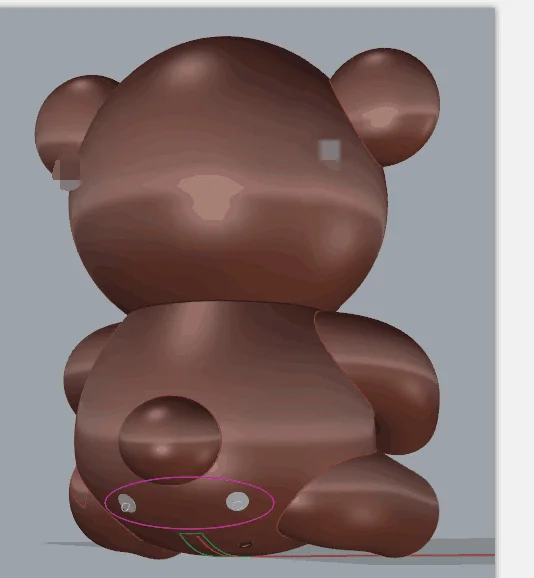
- 02 Modelled in 3D first, so the proportions were settled at three metres before any fabric was cut.
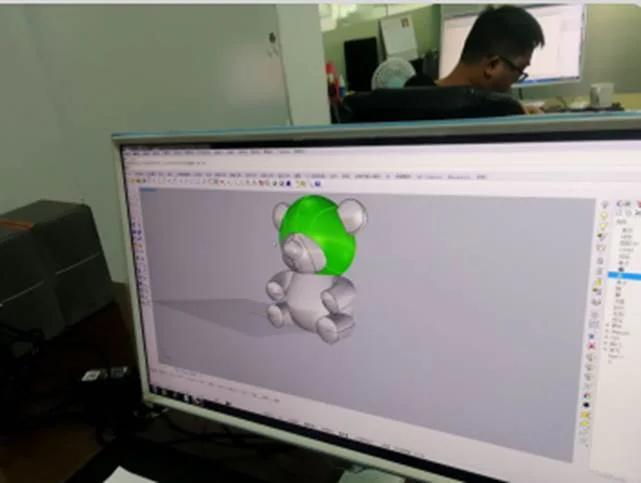
- 03 Worked on screen with the client's character sheet beside it — ear set, muzzle length, the size of the paw pads.
- 04 In place at the event in Japan, October 2018.
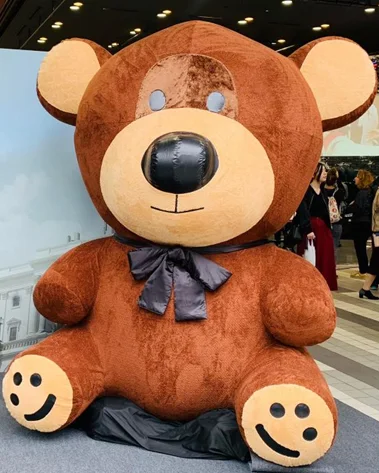
In August 2018, Ubisoft was seven months from launching Tom Clancy’s The Division 2. One of the game’s small, human touches is Tommy the Teddy Bear — a scuffed brown bear that Agent Johnson keeps clipped to his go-bag and carries into every fight through a ruined Washington, D.C. Ubisoft’s team wanted Tommy at a promotional event in Japan that October, ahead of the game’s March 2019 release: not a keychain, but a bear three to four metres tall that people would queue to be photographed with.
The email that arrived on a Tuesday asked three things. Could it be made. What would it roughly cost. And was mid-October even possible. That was nine weeks away, and the brief had to clear before anyone committed to the idea.
The problem was not the size. It was the shipping.
A stuffed three-metre bear is straightforward to sew and almost impossible to use. It fills most of a shipping container, it will not fit through a venue door, and it weighs enough that moving it across a room needs a crew. And this one had to fly to Japan, stand in a public space for the event, and come home again.
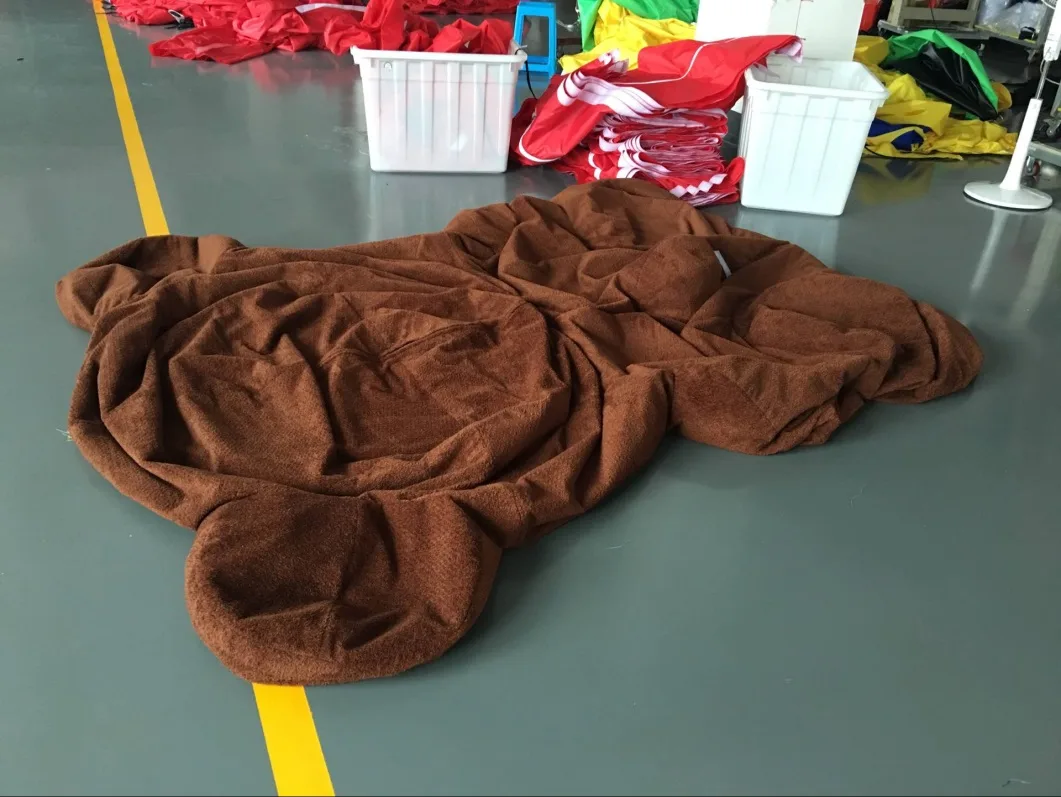
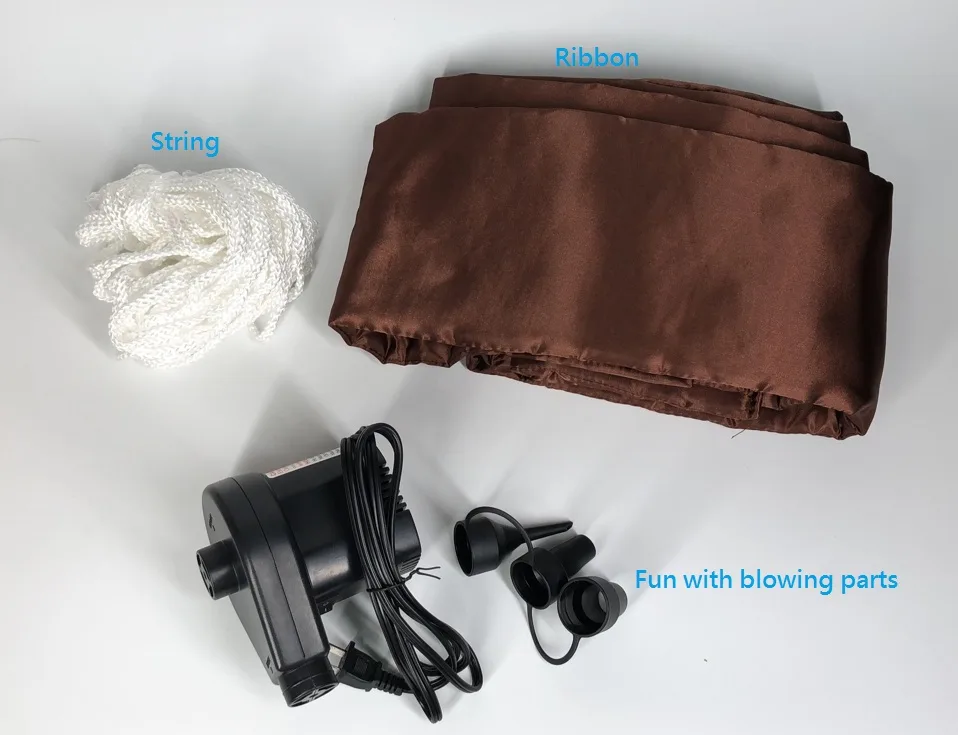
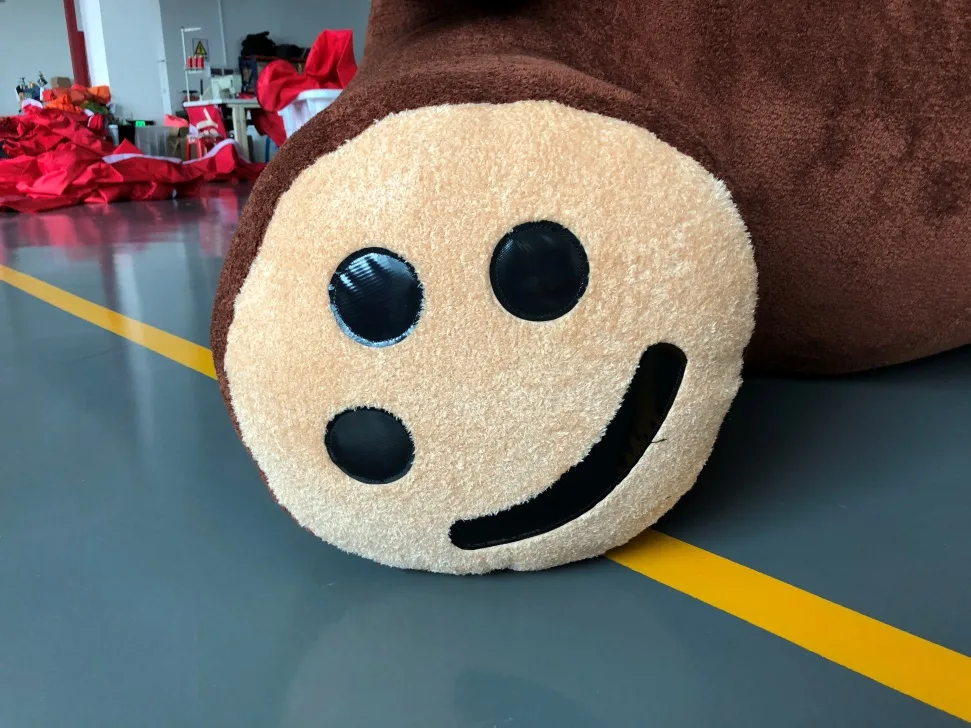
So we did not build a stuffed bear. We built an inflatable plush: a sewn plush skin, constructed the way a plush toy is constructed, over an internal air chamber with a zipped access panel and a valve. It inflates on site with an electric pump, holds its shape for the event, and deflates flat afterwards — bear, pump, tether cord and bow travelling as a few pieces of ordinary freight rather than a crate. That decision, made on day one, is what made the nine weeks possible.
Modelled in 3D before a metre of fabric was cut
At normal plush sizes you judge proportions with a sample in your hand. At three metres you cannot: a muzzle a little too long, or ears set a little too low, is a mistake you only discover once the fabric is cut and the bear is standing up — and there was no time for a second bear.
So the first version of Tommy was a 3D model. Working from Ubisoft’s character reference, we set the head-to-body ratio, the ear placement, the size of the nose and the paw pads against a human figure, and checked it from every angle on screen. The pattern came off that model. The details that make a small bear read as a bear — the darker textured forehead patch, the glossy black nose, the stitched mouth, the appliqué paw pads, the oversized satin bow — were all sized on the model so they would still hold from across a hall.
What it took
Two decisions carried the timeline. Inflatable rather than stuffed: everything downstream — freight, venue logistics, packing, set-up — became easy the moment that was settled, and none of it would have worked the other way. And the 3D pass, which meant the proportions were right before the first piece of fabric was cut, rather than after the first sample.
Why this one matters
Most enquiries for a “giant plush” are really enquiries for an event prop that has to arrive, stand up, photograph well and leave again. Answering that brief with the techniques we use for a keychain — pattern from a model, appliqué where print would fail, a fabric that survives a weekend of hugs — is what made this a plush project rather than an inflatables project. And it packs flat.
Every number on this page,
in a PDF you can forward.
Capabilities, capacities, compliance, MOQs. Plus our biweekly sourcing letter.