Why Your E-Commerce Store Needs a 100% Replacement Guarantee When Ordering Custom Branded Merchandise
The Order That Arrives Wrong — and What It Actually Costs You
Picture this: you’ve spent weeks briefing a supplier on your custom branded caps. Colors are locked. Logo placement is approved. You’ve already announced the drop to your email list. Then the shipment lands and the embroidery is off-center, the colorway is three shades darker than the sample, and a quarter of the units have stitching that won’t survive a single wash.
You now have two problems. The first is the inventory — a sunk cost sitting in a warehouse. The second, and the one that keeps founders up at night, is what happens when some of those units reach customers before you catch the issue.
Defective branded merchandise doesn’t just generate refund requests. It erodes the brand equity you’ve been building. A customer who receives a poorly made custom item doesn’t think “the manufacturer messed up.” They think your brand is cheap. That association sticks, and in 2026’s e-commerce environment — where the average return rate across all categories sits at around 19–20.5% and apparel returns run even higher — you cannot afford to hand customers an extra reason to send product back.
According to current industry data, the actual cost of processing a single return runs 3–4 times higher than the refund amount alone, once you factor in shipping, labor, restocking, inventory depreciation, and lost customer lifetime value. For a custom merchandise order where units can’t simply be restocked and resold, that math gets worse fast. The damage from a bad batch isn’t a line item — it’s a cascade.
This is why, when you’re evaluating manufacturers and sourcing agents for custom branded merchandise, the single most important question you can ask is not “what’s your price per unit?” It’s: what happens when something goes wrong?
Why Most Suppliers’ Quality Promises Don’t Actually Protect You
Most manufacturers will tell you they care about quality. Very few of them put anything binding behind that statement.
The standard arrangement in overseas manufacturing goes something like this: you approve a sample, production runs, goods ship, and you inspect on arrival. If there’s a problem, you open a dispute. Then begins the negotiation — partial credit, a discount on the next order, maybe a replacement for the most obviously defective units. Meanwhile, you’ve already paid for shipping both ways, your launch timeline has slipped, and you’re dealing with customer complaints.
This is the gap between a quality claim and a quality guarantee. The word “guarantee” only means something when it comes with a specific, no-argument commitment to make things right. In the context of custom branded merchandise, the gold standard is a 100% replacement guarantee: if the product doesn’t meet spec, it gets replaced. Full stop. No negotiation, no partial credit, no “we’ll do better next time.”
But here’s the part that most brands miss: a replacement guarantee is only as strong as the quality control process sitting behind it. A supplier who ships defective goods and then replaces them is still disrupting your business. The replacement takes time. Your customers don’t wait. What you actually want is a manufacturer whose QC process catches problems before they leave the factory floor — and whose guarantee exists as a backstop for the rare cases that slip through, not as the primary quality mechanism.
That distinction matters enormously when you’re sourcing custom headwear, bags, or apparel at scale. The categories where branded merchandise most commonly fails — stitching, color accuracy, material consistency — are exactly the categories where problems are easiest to catch during production and hardest to fix after the fact.
What On-Site QC Inspectors Actually Do (and Why Remote Oversight Isn’t the Same Thing)
There’s a version of quality control that happens at a desk, thousands of miles from the factory. A buyer emails a checklist. The factory self-certifies. A photo of the finished product gets sent over. The shipment is approved.
This approach probably works fine for commodity goods with tight tolerances and standardized specs. For custom branded merchandise — where every order is unique, where your logo and colorway are the product — it tends to fall short.
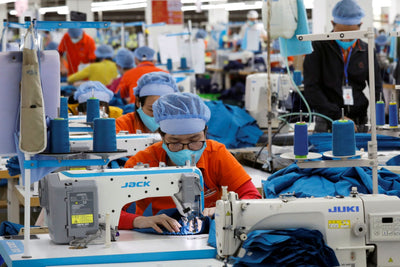
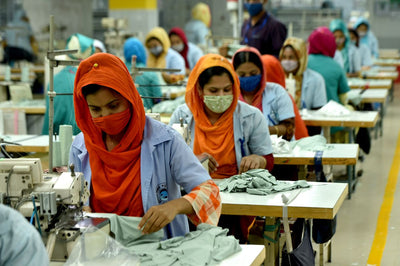
On-site quality control inspectors operate differently. They’re physically present on the factory floor, checking materials before production begins, catching deviations during the manufacturing run, and conducting final inspections before goods are packed for shipment. The value of that physical presence is hard to overstate. Factories know when they’re being watched. Production quality tends to be meaningfully higher when an inspector is on-site versus when oversight is remote or self-reported.
During-production inspections — typically conducted when 10–50% of goods are completed — allow corrective action while manufacturing is still underway. That’s the point where a color mismatch or a structural defect can be fixed without scrapping the batch. A final pre-shipment inspection, once 100% of units are produced and packed, provides the last checkpoint before goods leave the country. The combination of both is what separates suppliers who catch problems from suppliers who discover them.
For e-commerce brands sourcing custom bags or apparel from factories in Bangladesh, Vietnam, India, or China, having inspectors who are locally based — not flying in from another city — matters for scheduling, regional manufacturing knowledge, and the ability to respond quickly when something looks off mid-production. An inspector who understands regional manufacturing practices and common quality issues in a specific country is genuinely more effective than a generalist parachuted in for a single visit.
This is the infrastructure that makes a replacement guarantee credible. It’s not just a promise — it’s the process that makes the promise rarely necessary.
The Business Case for Choosing a Manufacturer Who Guarantees Their Work
There’s a tendency among e-commerce operators to treat quality assurance as a cost center — something to minimize when margins are tight. That framing gets the math backwards.
Consider what a single problematic batch of custom branded merchandise actually costs: the original production cost, inbound shipping, the cost of returns processing (which runs roughly $5–15 per unit domestically just for shipping, before labor and restocking), customer service time, potential negative reviews, and the downstream effect on repeat purchase rates. For a brand doing meaningful volume, a 5% defect rate on a 1,000-unit order isn’t a minor inconvenience. It’s a material financial event.
A manufacturer who offers a genuine 100% replacement guarantee is essentially absorbing that tail risk. They’re saying: we’re confident enough in our process that we’ll take responsibility for the outcome. That confidence tends to be well-founded, because suppliers who make that commitment have strong incentives to invest in the QC infrastructure that makes it sustainable.
For US-based e-commerce brands sourcing internationally, the practical implications are significant. You’re not just buying units — you’re buying certainty. Certainty that what you approved in the sample will be what your customers receive. Certainty that if something does go wrong, your business won’t absorb the full cost. Certainty that your brand’s reputation is protected at the production stage, not just the customer service stage.
Brands that treat quality as a final inspection step rather than something embedded across the entire production process tend to discover their quality problems at the worst possible moment — after goods have shipped, after customers have received them, after reviews have been written. In 2026, with fashion and apparel return rates running between 24–40% even under normal conditions, adding a preventable quality problem on top of that baseline is a margin killer.
Headwind Group, which has operated as an OEM manufacturer and sourcing agent since 1980 with factories and offices across Bangladesh, Vietnam, Myanmar, India, and China, backs its production with a 100% replacement guarantee and maintains 30+ on-site QC inspectors across Asia. The structure — permanent, locally based inspectors rather than contracted third parties — means quality oversight is embedded in every production run, not bolted on as an afterthought. For brands sourcing custom apparel or promotional merchandise at scale, that kind of institutional commitment to quality is worth more than a lower per-unit price from a supplier with no accountability mechanism.
What to Actually Ask When Evaluating a Merchandise Supplier
Price per unit is easy to compare. Quality infrastructure is harder to evaluate, but it’s the variable that determines whether a supplier relationship works long-term.
When you’re vetting a manufacturer or sourcing agent for custom branded merchandise, the questions that matter most are operational and specific:
Do you have on-site inspectors, or do you use contracted third parties? Permanent, employed inspectors have more accountability than freelance inspection services. They’re also more likely to have deep product category knowledge relevant to your specific items.
At what stages of production do inspections occur? Pre-production checks on raw materials, during-production inspections, and final pre-shipment inspections serve different purposes. A supplier who only inspects at the end of the run is catching problems too late to fix them cost-effectively.
What is your policy when goods don’t meet spec? Push past vague answers here. “We’ll work something out” is not a guarantee. A 100% replacement guarantee means exactly that — if the product doesn’t meet the approved specifications, it gets replaced at no additional cost to you.
How quickly can you provide quotes and production updates? Quality assurance isn’t only about the physical product — it’s also about information quality. A supplier who can turn around a quote within 24 hours and provide transparent production updates is one who has the operational infrastructure to manage your order properly.
The answers to these questions will tell you more about a supplier’s actual quality commitment than any certification or marketing claim. Suppliers who invest in real QC infrastructure — inspectors on the ground, clear replacement policies, transparent communication — are the ones whose guarantees are worth something.
For e-commerce brands building a merchandise line, the right supplier isn’t necessarily the cheapest one. It’s the one whose quality process means your customers receive exactly what you intended — and whose guarantee means you’re protected when the unexpected happens.