Tote Bags vs. Backpacks vs. Cross-Body Bags: Which Custom Branded Bag Style Drives the Most Sales for UAE E-Commerce Stores?
The Format Question Most UAE Brands Get Wrong
Most UAE e-commerce stores picking a bag category for their first bulk order start in the wrong place. They look at what competitors are stocking, or they go by personal preference. A better starting point: look at which bag format your specific customer actually carries, and whether your brand’s visual identity translates well onto that silhouette at scale.
The UAE market adds a layer of complexity that generic bag-buying guides ignore. With roughly 80% of the population being expatriates, consumer preferences span South Asian, Arab, Southeast Asian, and Western demographics simultaneously. A canvas tote that sells strongly to a 28-year-old European expat in JLT may sit dead in a warehouse if your customer base skews toward working professionals commuting from Sharjah. Format selection, in this market, is audience selection.
This guide breaks down all three major bag categories — tote bags, backpacks, and cross-body bags — against the specific demands of UAE e-commerce in 2026: sell-through rate potential, branding surface area, unit economics, and consumer demand signals.
Tote Bags: High Volume, High Visibility, Lower Barrier to Entry
Globally, tote bags hold the largest share of the handbag market — commanding 41.21% of market share in 2025, according to Mordor Intelligence — and that dominance reflects something practical: they are the easiest bag format for a brand to sell, gift, and reorder.
In the UAE specifically, tote demand is being shaped by two forces pulling in the same direction. First, sustainability. The Middle East and Africa region holds roughly 10% of the global tote bag market, with growth driven primarily by increasing awareness of environmental issues and a shift toward sustainable products. South Africa and the UAE are the leading countries in this regional market, with a growing number of local brands entering the scene. Second, the UAE’s own plastic bag reduction push has created genuine consumer appetite for reusable alternatives — demand that a well-branded canvas or RPET tote can capture directly.
For e-commerce brands, totes offer the largest flat branding surface of any bag format. A standard 38cm x 42cm canvas tote gives you a billboard-sized print area on both sides. Screen printing, embroidery, and full-color heat transfer all work cleanly on canvas and cotton twill. That visibility is why custom cotton tote bags remain one of the most effective and widely used marketing tools for promotional campaigns — when ordered in bulk, they become a cost-effective solution for large-scale brand exposure.
Where totes underperform: They struggle with perceived value in the UAE’s premium-oriented consumer segments. Dubai’s affluent shopper base — which spends an average of $1,600 per capita on fashion annually, compared to $500 in the US — often associates canvas totes with giveaway culture rather than purchasable product. If you’re positioning a tote as a retail SKU rather than a brand gift, the material and hardware choices need to work harder: waxed canvas, leather handles, and structured bases all move the format upmarket.
Tote bag quick verdict: Best format for brands targeting eco-conscious consumers, Ramadan gifting campaigns, and corporate gifting where logo visibility matters more than perceived luxury. Lowest minimum order risk, fastest design iteration.
| Factor | Tote Bags |
|---|---|
| Branding surface | Large (both panels) |
| Unit cost at scale | Low–Medium |
| Perceived value | Medium (material-dependent) |
| UAE demand signal | Strong (sustainability + gifting) |
| Best use case | Promotional, gifting, eco retail |
Backpacks: Higher AOV, Stronger Product Story, Narrower Audience
The global backpack market grew from USD 19.41 billion in 2025 to USD 20.73 billion in 2026, with a projected CAGR of 7.09% through 2032. In the Middle East, the backpack industry reached USD 791 million in 2025 and is forecast to hit USD 1.37 billion by 2033 — a trajectory driven by urbanization, a growing youth population, and increasing interest in outdoor activities.
For UAE e-commerce brands, backpacks occupy a different commercial position than totes. The average order value is higher, the product story is richer (tech features, ergonomic design, material quality), and the audience — students, young professionals, gym-goers, frequent travelers — is specific enough to target with precision on Instagram and TikTok, which remain the primary social discovery channels for UAE fashion shoppers.
The UAE’s role as a global travel hub adds a meaningful tailwind here. With Dubai functioning as one of the world’s busiest transit cities, and with the government investing in large-scale tourism infrastructure, demand for travel-oriented carry products is structurally supported. Travel backpacks led the global backpack market with a 46.54% share in 2026, driven by increasing travel and adventure activities — a trend that maps directly onto Dubai’s inbound and outbound traveler demographic.
The branding calculus on backpacks is different from totes. Logo placement tends to be smaller and more restrained — a chest logo, an embroidered patch, a debossed zipper pull — but the product itself carries the brand story. A well-constructed backpack with a recognizable silhouette becomes a walking advertisement in a way a flat tote cannot. For brands building product lines rather than promotional items, this distinction matters.
Where backpacks underperform: Unit costs are higher, minimum order quantities are typically larger, and design complexity means longer sample lead times. For a first-time bulk buyer, the risk profile is steeper. There’s also a gender skew to account for: backpacks trend male and youth-oriented in the UAE market, which may not fit every brand’s audience.
Backpack quick verdict: Best format for brands with a defined active, travel, or tech-adjacent audience. Higher AOV potential, stronger product storytelling, but requires more upfront investment in design and sampling.
| Factor | Backpacks |
|---|---|
| Branding surface | Medium (logo-led) |
| Unit cost at scale | Medium–High |
| Perceived value | High |
| UAE demand signal | Strong (travel, youth, outdoor) |
| Best use case | Retail SKU, brand merchandise, travel |
Cross-Body Bags: The Format with the Fastest Growth Trajectory
Cross-body bags are the format most likely to be underestimated by UAE e-commerce buyers in 2026, and that’s probably where the opportunity sits.
The global crossbody bag market is projected to expand from USD 4.2 billion in 2026 to USD 6.8 billion by 2033 — a growth rate that outpaces both totes and standard backpacks in percentage terms. The driver is behavioral: consumers increasingly seek hands-free convenience and secure storage, making crossbody bags popular for travel, work, and casual outings. In the UAE context, that behavioral shift is amplified by the country’s outdoor retail culture, mall-heavy social environment, and a cosmopolitan population that treats bag choice as personal expression.
Women’s demand is the anchor — accounting for 89.14% of handbag demand globally in 2025 — but the fastest-growing segment is men’s. Growth in men’s bags reflects a shift away from traditional briefcases and backpacks toward crossbody bags and weekenders that suit hybrid work schedules. For UAE brands targeting a mixed-gender or male-skewing audience, a structured crossbody with neutral colorways and minimal hardware is probably the most underdeveloped SKU opportunity in the bag category right now.
From a branding perspective, cross-body bags sit between totes and backpacks. The branding surface is smaller than a tote but the format commands higher perceived value — especially in leather, faux leather, or structured nylon. The UAE’s fashion-conscious consumer base, which spends 55% of retail fashion budgets on fashion and accessories, responds well to bag formats that signal lifestyle intent rather than just utility.
The e-commerce dimension matters here too. Online sales held the largest share of crossbody bag revenue in recent years, driven by consumers’ increasing preference for e-commerce platforms. For a Shopify or Noon-based UAE brand, a crossbody is a product that photographs well, ships flat, and tells a clear lifestyle story in a single product image — all of which reduce friction in the conversion funnel.
Where cross-body bags underperform: They require more design precision than totes. Strap hardware, zipper quality, and interior organization all affect perceived quality at a level that a canvas tote can absorb more forgivingly. For first-time OEM buyers, the quality control requirements are higher. Seasonality can also be a factor — demand for evening-style crossbodies spikes during Dubai Shopping Festival and Eid, which requires inventory planning.
Cross-body quick verdict: Best format for brands targeting women 25–45, fashion-forward positioning, and e-commerce-native product lines. High growth trajectory, strong photography appeal, and meaningful AOV upside if material quality is right.
| Factor | Cross-Body Bags |
|---|---|
| Branding surface | Small–Medium (logo-led) |
| Unit cost at scale | Medium |
| Perceived value | Medium–High |
| UAE demand signal | Strong and accelerating |
| Best use case | Fashion retail, gifting, lifestyle brands |
Which Format Should You Order First? A Decision Framework
There’s no universal answer, but the decision tree is short.
Order tote bags first if: your brand is in promotional products, corporate gifting, or eco-retail; you need a low-risk entry point with fast turnaround; or your customer base is broad and you need maximum logo visibility at the lowest cost per impression.
Order backpacks first if: your audience is clearly defined as students, travelers, or active lifestyle consumers; you’re building a product line with a higher price point; or you’re targeting the UAE’s growing youth demographic and want a product with genuine daily utility.
Order cross-body bags first if: your brand is fashion-forward, your customer is female 25–45, you sell primarily through e-commerce, or you’re targeting the UAE’s premium consumer segment and need a bag that photographs well and ships efficiently.
Brands with the budget to test multiple formats should probably start with a tote and a cross-body in the same order — the two formats serve different purchase occasions (promotional vs. retail) and can be manufactured on the same production run with an experienced OEM partner.
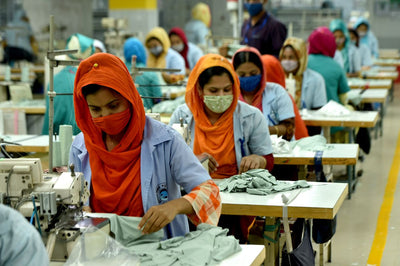
For UAE e-commerce brands sourcing in bulk, the manufacturing partner question is as important as the format question. Headwind Group — a Hong Kong-based OEM manufacturer with factories across Bangladesh, Vietnam, Myanmar, India, and China — produces all three bag formats with full customization, 24-hour quotes, and a 100% replacement guarantee backed by 30+ on-site QC inspectors across Asia. Their rPET bag and backpack manufacturing range is particularly relevant for UAE brands that need to signal sustainability credentials to an increasingly eco-conscious consumer base, with RPET materials combining recycled content with the durability and print quality that branded retail demands.
Whatever format you choose, the UAE market in 2026 rewards specificity. A canvas tote with a generic logo will move at promotional pricing. A structured crossbody with considered hardware and a clear brand story will move at retail margin. The format is the starting point — the execution is what determines where on that spectrum your product lands.