Snapback vs. Dad Cap vs. Trucker Hat: Which Custom Embroidered Style Sells Best for Canadian Online Stores?
The Style Decision That Actually Affects Your Margins
Canadian e-commerce brands ordering their first run of custom embroidered headwear tend to get stuck on the same question: snapback, dad cap, or trucker hat? It sounds like a style preference, but it’s really a sourcing and sell-through decision. The wrong choice means dead inventory. The right one can make a branded cap your store’s top-performing SKU.
All three styles accept embroidery well — that part is straightforward. What differs is who buys them, how much they cost to produce at scale, and how cleanly your logo translates onto each silhouette. Here’s a direct comparison built for Canadian online retailers sourcing in 2026.
What Each Style Actually Is (And Why the Differences Matter for Branding)
Snapbacks are structured, six-panel caps with a flat brim and a plastic snap closure at the back. The front panel sits at nearly a 90-degree angle — hard, pre-shaped, and high-profile. That geometry is the point. A snapback’s front panel is ideal for larger or more colorful designs that you want to be very visible, which makes them a natural fit for bold logos, streetwear-adjacent brands, and any design with tight linework that needs a firm, flat surface to read clearly. The tradeoff is that snapbacks skew younger and more trend-sensitive — they perform well in urban fashion, sports merch, and hip-hop-influenced brands, but can feel off-brand for a rustic outdoor label or a wellness company.
Dad caps are the opposite in almost every structural way. They are unstructured, six-panel, low-profile caps made from soft cotton or cotton-twill, with a pre-curved brim and a cloth strap or metal buckle at the back. There is no stiff buckram inside the front panel, which gives the crown that characteristic slouch. Dad hats are popular because they’re easy to wear, go with just about anything, and have a relaxed, casual charm — and that versatility is precisely why lifestyle brands, coffee shops, wellness labels, and outdoor companies reach for them. The softer front panel means embroidery needs to be simpler and bolder; intricate multi-color designs can look muddy on an unstructured surface.
Trucker hats split the difference structurally. They have a structured foam or cotton-twill front panel — giving you the logo real estate of a snapback — but the back panels are open polyester mesh, which makes them significantly more breathable. A trucker hat features a structured front panel with mesh back panels for breathability, making it ideal for outdoor wear and warmer weather. That combination of branding surface and ventilation is why trucker hats dominate outdoor brands, breweries, surf labels, and agricultural or lifestyle companies. The Richardson 112 is the single best-selling custom hat in North America — and it’s a trucker. That fact alone tells you something about where embroidered headwear demand actually concentrates.
Head-to-Head Comparison: Snapback vs. Dad Cap vs. Trucker Hat
| Feature | Snapback | Dad Cap | Trucker Hat |
|---|---|---|---|
| Crown structure | Structured, high-profile | Unstructured, low-profile | Structured front, mesh back |
| Brim style | Flat | Pre-curved | Flat or slightly curved |
| Best for embroidery | Excellent — large, detailed logos | Good — simple, bold designs | Excellent — large logos, patches |
| Closure | Plastic snap | Cloth strap / metal buckle | Plastic snap |
| Target audience | Streetwear, sports, urban fashion | Lifestyle, wellness, casual brands | Outdoor, brewery, promo, surf |
| Breathability | Moderate | Moderate | High (mesh back) |
| OEM MOQ (typical) | 144–300 pcs | 144–300 pcs | 144–300 pcs |
| Wholesale unit cost | Mid | Low–Mid | Low–Mid |
| Retail price range (CAD) | C$30–C$55 | C$25–C$45 | C$25–C$50 |
Pricing at the OEM level scales predictably with volume. Bulk custom hat costs decrease significantly with order size — at 144 pieces, a decorated hat typically runs around $7 USD per unit, while orders of 576+ pieces can drop to under $4 per unit. That dynamic applies across all three styles, though trucker hats can carry a slight premium if you’re upgrading from foam fronts to structured cotton-twill or corduroy.
Which Style Sells Best in the Canadian Market?
Canada’s e-commerce headwear market doesn’t behave identically to the US, but the underlying demand drivers are similar: outdoor lifestyle, casual streetwear, and branded merchandise for events and teams. The difference is that Canadian consumers — particularly in BC, Alberta, and Ontario — tend to skew toward outdoor and lifestyle aesthetics more than pure urban streetwear.
For Canadian online stores, trucker hats are probably the most reliable volume driver across the widest range of brand identities. Mesh-back trucker silhouettes continue to grow in popularity across age groups and buyer segments, and in 2026 the category has moved well beyond its promotional-giveaway origins. Trucker hats have become a staple in streetwear, outdoor gear, and lifestyle fashion, and the upgrade cycle is real — brands are now sourcing structured cotton-twill or corduroy fronts instead of thin foam, which pushes the perceived value up and supports a higher retail price point.
Dad caps are the strongest choice for lifestyle and wellness brands targeting a broad demographic. Their versatility ensures they never go out of style, and the lower-profile silhouette photographs well on product pages — a real advantage for Shopify stores where the product image drives the conversion. In 2026, organic cotton twill is increasingly the material of choice for unstructured dad hats, which aligns with the sustainability expectations of Canadian millennial and Gen Z shoppers.
Snapbacks remain the best option for brands explicitly in the streetwear, sports, or youth fashion space. Snapbacks dominate urban and performance markets, and their structured front panel makes them the easiest canvas for complex embroidery. But they carry more trend risk than the other two styles — a snapback that feels current this season can look dated in 18 months, which matters for stores building evergreen product catalogs.
For a Canadian store selling into multiple niches or building a private-label headwear line from scratch, the practical answer is to lead with a trucker hat, add a dad cap as the lifestyle option, and treat the snapback as a targeted addition for a specific audience rather than a default SKU.
Embroidery Considerations by Style
The embroidery question is where a lot of Canadian brands get caught off-guard when they move from print-on-demand to OEM manufacturing. Each silhouette behaves differently under a needle.
Structured baseball caps and trucker hats are the most popular styles for embroidery because their stiff front panels provide a firm, flat surface that holds embroidered designs beautifully. That means a snapback or trucker hat can handle a detailed 8,000-stitch logo with color gradients and fine linework without distortion. A dad cap, by contrast, works best with simpler, bolder artwork — think a clean wordmark or a single-color icon. For brands looking for subtle branding, dad hats work well with small embroidered logos.
Trucker hats also have a natural advantage for patch applications — leather patches, woven patches, and PVC patches all sit cleanly on the foam or cotton-twill front. This is worth knowing if your brand aesthetic leans heritage or craft, since a leather patch on a trucker hat tends to photograph better than direct embroidery on a dad cap when you’re targeting a premium price point.
For 3D puff embroidery — which adds raised texture to lettering or icons — snapbacks and trucker hats are the go-to. The structured front panel gives the puff foam somewhere to anchor. Attempting 3D puff on an unstructured dad cap front usually produces inconsistent results.
Sourcing at Scale: What Canadian E-Commerce Brands Should Know
The practical sourcing math for Canadian online stores comes down to two things: landed cost and quality consistency across runs.
On cost, Bangladesh has emerged as a strong alternative to China for custom headwear — Bangladesh offers tariff-free caps compared to China, providing significant cost savings, which is a meaningful advantage for Canadian brands importing through the US or directly. Vietnam is another active manufacturing hub for headwear, particularly for brands that need multi-country production flexibility.
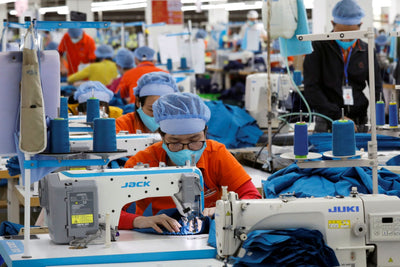
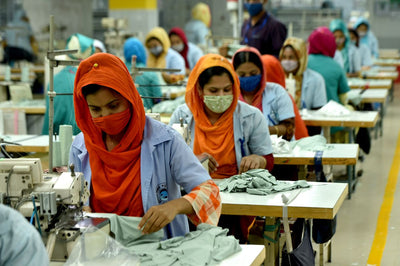
Headwind Group, which has operated factories and offices across Bangladesh, Vietnam, China, Myanmar, and India since 1980, manufactures all three cap styles — baseball caps, trucker caps, and more — with a 144-piece MOQ, 24-hour quotes, and over 30 on-site QC inspectors across Asia. For Canadian e-commerce brands scaling past the print-on-demand stage, that kind of direct OEM relationship typically cuts unit costs significantly compared to domestic decorators, while maintaining the quality control infrastructure that prevents costly returns.
Sample lead times of 1–2 weeks and production runs of 2–6 weeks mean a Canadian brand can test a new style, review a physical sample, and have inventory in a 3PL within 6–8 weeks — fast enough to react to seasonal demand without overcommitting to a single style before you know how it converts.
The broader headwear market context supports the investment: the global headwear market reached USD 29.73 billion in 2026 and is projected to grow to USD 38.63 billion by 2031, with e-commerce growing at an 8.35% CAGR as the fastest distribution channel. For Canadian online stores, that trajectory means custom embroidered headwear is not a niche add-on — it’s a category with real growth runway, and the brands that lock in quality OEM relationships now will be better positioned as competition intensifies.
The Verdict: Which Style to Prioritize First
If you’re a Canadian online store picking one style to launch with, the trucker hat wins on versatility, branding surface, and current market momentum. It works for outdoor brands, lifestyle labels, breweries, events, and corporate merchandise — and the 2026 trend toward premium materials means you can differentiate on quality rather than competing purely on price.
If your brand identity is explicitly casual and lifestyle-forward — think coffee, wellness, or fashion-adjacent apparel — the dad cap is the better anchor. It photographs well, ages gracefully in a product catalog, and appeals to the broadest demographic in the Canadian market.
The snapback belongs in your lineup when you have a clear streetwear, sports, or youth audience. It’s not the right default, but it’s the right choice when the audience calls for it.
All three styles can be sourced from the same OEM partner, which means you don’t have to choose just one forever — you can start with your strongest fit, validate the market, and expand the range once you know what your customers actually buy. That’s the practical path for most Canadian e-commerce brands building a headwear program in 2026.