OEM vs. Print-on-Demand: Which Manufacturing Model Is Better for Selling Custom Branded Merchandise Online?
Two Models, One Decision That Shapes Your Entire Business
Most e-commerce entrepreneurs treat the OEM vs. print-on-demand question as a cost problem. It’s actually a brand architecture problem. The manufacturing model you choose determines what your product looks like, what margin you keep, how fast you can fulfill, and whether your brand is differentiated or indistinguishable from the next store using the same Printful blank.
Both models are legitimate. Both are profitable under the right conditions. But they serve fundamentally different business stages and brand ambitions — and conflating them is one of the more expensive mistakes a new seller can make.
This comparison breaks down each model across the dimensions that actually move the needle: startup cost, per-unit economics, quality control, customization depth, and scalability. At the end, there’s a clear recommendation matrix depending on where your business is right now.
What Each Model Actually Is
Print-on-demand (POD) is a fulfillment model where a third-party supplier produces and ships each item only after a customer places an order. You upload artwork to a platform, list the product in your store, and the POD company handles everything from printing to delivery. There is no inventory, no upfront production cost, and no warehouse. The process is largely automated — a customer buys, the order syncs to your print provider, the provider charges your card for the base cost, and the item ships directly to your customer.
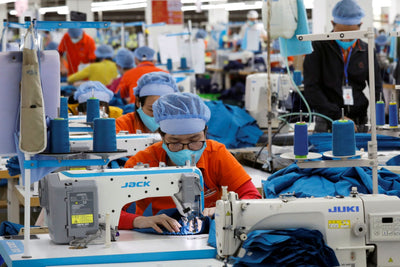
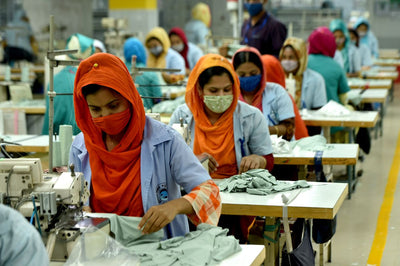
OEM (Original Equipment Manufacturer) manufacturing is a different arrangement entirely. You work with a factory to produce goods built to your exact specifications — your materials, your construction details, your branding, your packaging. Goods are manufactured in bulk, shipped to you or a 3PL, and fulfilled from inventory. The factory doesn’t design the product; you do. The factory doesn’t brand it; you do. You own every element of the finished good.
The distinction matters because POD and OEM are not simply cheap vs. expensive versions of the same thing. They represent different levels of product ownership, brand control, and financial commitment.
Side-by-Side Comparison
| Factor | Print-on-Demand | OEM Manufacturing |
|---|---|---|
| Upfront investment | Near zero | Moderate to significant (tooling, sampling, MOQ) |
| Per-unit cost | Higher (single-unit production) | Lower at volume (wholesale pricing) |
| Profit margins | Moderate; thin at scale | Higher at volume; improves with repeat orders |
| Minimum order quantity | 1 unit | Typically 100–1,000+ units depending on product |
| Customization depth | Limited (print placement, color) | Full (materials, construction, trims, labels, packaging) |
| Quality consistency | Variable across production runs | High; controlled via on-site QC |
| Lead time per order | 2–12 business days per item | 2–6 weeks for production runs, then ships from inventory |
| Inventory risk | None | Present; requires demand forecasting |
| Brand differentiation | Low (shared blanks across sellers) | High (product is unique to your brand) |
| Scalability ceiling | Moderate (margins compress at volume) | High (unit economics improve at scale) |
The numbers behind this table are worth dwelling on. POD platforms typically charge per-item base costs that stay relatively flat regardless of volume. A custom t-shirt on a major POD platform might cost $13–18 in base production before shipping — and that cost doesn’t drop much whether you sell 10 or 10,000. OEM bulk production, by contrast, drives unit costs down meaningfully as quantities increase, which is why margins improve as a brand scales.
Where Print-on-Demand Wins
POD’s strongest argument is capital efficiency at the start. You don’t pay for manufacturing until after you’ve already sold the item — which means if a design doesn’t sell, you haven’t spent money producing a stack of unsold goods. For first-time sellers and small creators testing whether a niche will convert, that risk elimination is genuinely valuable.
The setup friction is also minimal. Most POD platforms integrate directly with Shopify and other e-commerce platforms, and sellers can go from design file to live product listing within hours. That speed matters when you’re validating multiple product concepts simultaneously.
POD also handles fulfillment infrastructure entirely. You don’t need a 3PL relationship, a warehouse, or a logistics team. The platform manages printing, packing, and shipping — which keeps your operational overhead low while you focus on marketing and audience building.
But these advantages come with real constraints that tend to surface once a brand gains traction. Most POD providers support direct-to-garment printing and sublimation, but cannot offer screen printing, embroidery, or specialty techniques like debossing or laser engraving. For a brand where presentation matters — say, an embroidered logo on a structured cap — POD production simply cannot deliver the finish. Fabric options are also constrained; POD platforms typically stock a limited range of blank garments, which can make it difficult to align materials with premium or performance brand standards.
There’s also the consistency problem. Because production happens one order at a time across different equipment calibration cycles, two units of the same design ordered a week apart may not look identical. For most early-stage stores this is tolerable. For brands building a reputation on product quality, it’s a recurring support issue.
And then there’s the margin ceiling. Selling 100 t-shirts at a $3 profit per shirt requires significantly more marketing spend, time, and operational effort than selling fewer premium items at a $30 margin. As volume grows, POD’s flat per-unit costs become a structural drag on profitability.
Where OEM Manufacturing Wins
OEM manufacturing is the model that built most of the recognizable merchandise brands you can name. When you order in bulk from a factory, you benefit from wholesale pricing and reduced per-unit production costs — which directly expands your margin and allows more aggressive pricing or higher profitability at the same retail price.
More importantly, OEM gives you actual product ownership. You specify the fabric weight, the construction method, the trim details, the label, the hang tag, the packaging insert. Every element of the finished product is an expression of your brand rather than a shared blank that dozens of other Shopify stores are also selling. That differentiation is hard to replicate through design alone — it lives in the physical object.
Quality control under OEM is also categorically different. With bulk production, you can request and approve physical samples before committing to a full run, inspect finished goods before they ship, and maintain tight tolerances on color matching, print placement, and garment construction. Every unit in a production run is manufactured under the same conditions — the 500th piece matches the first.
For categories like custom headwear, structured bags, or branded apparel where fit, material, and finish are part of the value proposition, OEM is the only model that can deliver a product worth the premium price. POD can print a logo on a hat; OEM can build the hat around your brand.
The tradeoff is upfront commitment. OEM requires minimum order quantities, sampling costs, and production lead times — typically two to six weeks for manufacturing runs. You’re making a bet on demand before you’ve confirmed it. That’s manageable when you’ve validated your market, but risky when you haven’t.
The global OEM apparel market was valued at approximately $450 billion in 2025, with the broader OEM/ODM clothing market projected to grow from $141 billion in 2024 to over $227 billion by 2033 — reflecting sustained demand from brands that have figured out that product differentiation, not just graphic design, is what builds durable e-commerce businesses.
The Hybrid Path Most Successful Brands Actually Take
The cleanest strategic answer is sequential rather than binary. Many successful brands start with POD to validate which designs and product categories actually sell, then transition their best-performing SKUs into OEM bulk production once demand is proven. This staged approach reduces risk while building toward full product ownership and better economics.
In practice, that transition point tends to arrive around 50–200 monthly units per SKU, where the math on OEM unit costs starts to outpace POD margins even after accounting for inventory carrying costs. At that volume, the per-unit savings from bulk production typically justify the MOQ commitment — and the quality upgrade often drives repeat purchase rates that POD products struggle to match.
For brands selling custom bags or apparel where material quality and construction detail are central to the product experience, the transition tends to happen earlier, because POD’s blank limitations become a competitive liability before the volume math alone would force the switch.
The key question isn’t which model is universally better. It’s which model fits where your business is right now, and what your roadmap looks like six months from now.
How to Choose: A Decision Framework
Use this to orient the decision based on your actual situation rather than abstract preference.
Start with POD if:
- You’re launching your first merchandise line and haven’t validated demand
- Your monthly volume is under 50 units per SKU
- You have limited working capital and need to preserve cash
- Your product is primarily graphic-driven (the design is the differentiator, not the material)
- You need to test multiple product concepts simultaneously with minimal financial exposure
Move to OEM when:
- You have consistent, predictable demand on at least a few core SKUs
- Your POD margins are compressing and you’re spending more on ads to maintain the same revenue
- Your brand requires specific materials, construction methods, or finishes that POD cannot deliver
- You’re building toward wholesale, retail placement, or promotional product contracts where product quality and consistency are non-negotiable
- You want to own the product — not just put a logo on someone else’s blank
For e-commerce sellers moving into OEM for the first time, the sourcing process can feel opaque. Working with an established manufacturer that offers 24-hour quotes, on-site quality control, and a clear replacement guarantee removes much of that uncertainty. Headwind Group, for example, provides quotes within 24 hours, maintains over 30 on-site QC inspectors across Asia, and backs production with a 100% replacement guarantee — which makes the OEM commitment considerably less risky for brands making the transition from POD.
The print-on-demand market is growing fast — projected to reach between $57 billion and $103 billion by 2033-2034 — which reflects genuine demand for low-barrier merchandise models. But growth in a model doesn’t mean it’s the right model for your brand at every stage. The sellers who build durable businesses tend to use POD as a testing layer and OEM as a scaling layer, not as permanent alternatives to each other.