OEM vs. Print-on-Demand: Which Manufacturing Model Actually Works for Selling Custom Branded Merchandise Online?
The Model You Start With Is Not Always the Model You Should Scale With
Most e-commerce brands selling custom merchandise start with print-on-demand. The appeal is obvious: no inventory, no upfront capital, and you can list a product in an afternoon. But somewhere between the first hundred orders and the first few thousand, a familiar problem surfaces — the margins are thin, the product quality is inconsistent, and the brand experience is largely out of your hands.
This is the point where the choice between print-on-demand (POD) and OEM (Original Equipment Manufacturer) bulk production stops being academic and starts costing real money. Both models have a place in e-commerce, but they serve very different stages of a brand’s growth. Understanding where each one breaks down — and where it delivers — is the clearest path to building a merchandise business that doesn’t run on hope.
Below is a direct, category-by-category comparison of both models, followed by a clear recommendation based on where your store is today.
Head-to-Head: OEM vs. Print-on-Demand at a Glance
| Factor | Print-on-Demand (POD) | OEM Bulk Manufacturing |
|---|---|---|
| Upfront Cost | Near zero; no inventory required | Requires capital for MOQ (minimum order quantity) |
| Per-Unit Cost | Higher; priced per single item | Lower; cost drops significantly with volume |
| Gross Margin (typical) | 20–40% on competitive basics | 50–65%+ achievable at scale |
| Net Margin (after fees/ads) | 15–35%, often lower on basics | Higher, with fewer platform dependencies |
| Quality Control | Dependent on POD supplier; reactive | On-site QC inspectors; proactive and auditable |
| Branding Control | Limited packaging, generic fulfillment | Full custom packaging, labels, and product specs |
| Scalability | Easy to add SKUs; hard to reduce per-unit cost | Per-unit cost drops as volume grows |
| Lead Time | 3–10 business days per order | 4–12 weeks for initial production run |
| Best For | Testing ideas, low-volume launches | Scaling a proven product with a defined audience |
These are ranges, not guarantees — actual outcomes depend on product category, supplier quality, and how tightly you manage costs on either side.
The Margin Problem With Print-on-Demand
Print-on-demand works by producing one item at a time after a sale is made. That convenience has a direct cost: every item is custom-printed only after a customer places an order, which means suppliers charge more per unit compared to bulk manufacturing. There are no economies of scale. You pay per item, not per batch, which means there is little room to negotiate lower costs unless your store is consistently producing high volume.
The gross margin figures that circulate online — often cited as 60–65% — are misleading for most sellers. Net margin is what you keep after production, shipping, marketplace fees, transaction fees, and marketing. For POD sellers, this is typically 15–35% depending on the product and how efficiently you run things. A basic t-shirt with a 60% gross margin can become a 15% net margin product once platform fees, ad spend, and returns are factored in.
Marketing spend makes this worse. A product with a 35% margin before marketing becomes a 15% margin product with 20% ad spend. For brands running paid social or Google Shopping, that math compounds quickly.
The category also matters. Margins can get even tighter with certain product categories like mugs, posters, or phone cases, while niche apparel with personalization can reach 50% or more. But those higher-margin products require design investment, niche positioning, and enough brand authority to avoid competing on price — none of which come easily in a saturated market.
The honest picture: POD is a viable model for testing product concepts and generating early revenue. It is not an efficient model for building long-term margin at scale.
What OEM Manufacturing Actually Changes
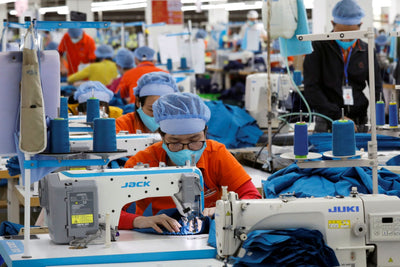
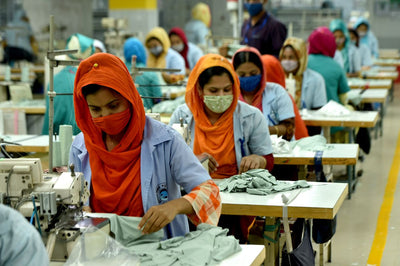
OEM manufacturing — where a brand works directly with a factory to produce goods to its own specifications — flips most of the POD disadvantages. The tradeoff is upfront capital and lead time. The reward is control: over the product, the packaging, the quality, and the unit economics.
Per-unit cost is the most immediate difference. Producing larger quantities of a product leads to a lower per-unit cost, allowing suppliers to take advantage of economies of scale. A product that costs $12 per unit through a POD platform might cost $4–6 per unit manufactured in bulk at a factory in Bangladesh or Vietnam — a difference that translates directly into margin at every price point.
Higher MOQs mean a lower cost per unit since production setup and raw material expenses are spread across more pieces. For example, producing 500 T-shirts may reduce the unit price significantly compared to just 50, giving established brands better profit margins. For categories like headwear, bags, and drinkware — where POD options are limited and quality variance is high — the cost advantage of OEM production is even more pronounced.
Quality control is the second major shift. With POD, quality control is largely out of your hands — you’re dependent on your POD supplier’s quality standards, printing technology, and production consistency. Problems like misprints, color inconsistencies, sizing variations, or printing defects surface only after customers receive their orders, which means the damage to your brand reputation is already done before you can respond.
OEM manufacturing inverts this. Rather than reacting to customer complaints, brands work with manufacturers who conduct pre-production sampling, in-line inspections, and final audits before goods ship. This is a structural difference in how quality is managed, not just a difference in degree.
Branding control is the third lever. POD platforms use the same packaging for all product orders, so your brand feels the same as the competition. OEM production allows full customization of packaging, labels, hangtags, and product materials — the elements that differentiate a brand from a commodity reseller.
When POD Makes Sense (And When It Doesn’t)
Print-on-demand is well-suited for specific situations:
- Concept validation. Before committing capital to a production run, POD lets you test whether a design or product category has an audience. A product that sells 50 units on POD is worth investigating for OEM production. One that sells three is not.
- Long-tail SKU management. Designs with unpredictable or seasonal demand are expensive to hold in inventory. POD handles the tail end of a catalog without the carrying cost.
- Early-stage brands with limited capital. Startup costs for a print-on-demand business can vary between $0 and $5,000, compared to the $5,000–$10,000+ typically needed to initiate an OEM production run with inventory.
But POD struggles in several scenarios that matter for growing brands:
- Competitive price environments. The ease of entry draws many sellers, escalating the battle for customer attention. When dozens of stores sell the same base product with different graphics, the only differentiator is price — and thin margins make that a losing game.
- Products where material and construction matter. A structured hat, a durable tote, or a stainless steel tumbler cannot be replicated by a POD platform with the same quality as a purpose-built factory run. The product category itself demands OEM.
- Scaling past a few hundred monthly units. Once a product has consistent demand, the per-unit cost gap between POD and OEM becomes the defining factor in profitability. Staying on POD past this point is leaving margin on the table.
The Scalability Argument for OEM
There is a ceiling to what print-on-demand can do for a growing brand, and it is lower than most sellers expect. Scaling from 100 to 1,000 products introduces new margin pressures — more SKUs means more complexity, more customer service, and more opportunities for things to go wrong. Volume does not automatically improve unit economics in POD the way it does in OEM.
With OEM, the opposite is true. As order volume grows, the per-unit cost falls, the supplier relationship deepens, and the brand’s ability to negotiate on price, lead time, and customization improves. Buying products in bulk results in savings and more profit on each unit sold. Brands that have moved from POD to OEM production for their best-selling SKUs consistently report margin improvements that compound over time.
For e-commerce brands selling custom headwear, bags, apparel, or drinkware, the product categories that drive the most revenue are also the ones where OEM manufacturing offers the clearest advantage. These are tactile, construction-dependent products where fabric weight, stitching, hardware, and finish matter — and where a POD platform’s generic base product is a poor substitute for something built to spec.
Headwind Group, an OEM manufacturer based in Hong Kong with offices and factories in Bangladesh, Vietnam, Myanmar, India, and China, works with e-commerce brands at exactly this transition point. Their 30+ on-site quality control inspectors across Asia conduct pre-shipment inspections rather than waiting for customer returns to surface problems. For brands sourcing custom headwear, bags, or promotional merchandise, the 24-hour quote turnaround and 100% replacement guarantee reduce the operational risk that typically makes brands hesitant to commit to a production run.
Which Model Is Right for Your Store in 2026?
The honest answer is that most growing brands need both models — but at different stages and for different parts of the catalog.
Use POD for:
- New designs and untested product categories
- Seasonal or limited-edition drops where inventory risk is high
- SKUs with unpredictable demand
Shift to OEM when:
- A product consistently sells 100+ units per month
- Your POD margins are being compressed by ad spend or platform fees
- The product category requires material quality that POD cannot deliver
- You are ready to build a brand identity that extends to packaging and presentation
The brands that grow past the $500K revenue mark in custom merchandise are almost universally operating with OEM partners for their core product lines. POD remains useful at the edges of the catalog, but the margin and quality control advantages of OEM manufacturing are too significant to ignore once volume justifies the investment.
For US-based e-commerce brands looking to make that transition, the key variables are minimum order quantity, lead time, and quality assurance infrastructure. Working with a manufacturer that has on-the-ground QC teams — rather than one that ships and hopes — is the difference between a scalable operation and a recurring customer service problem. Headwind Group’s collections spanning hats, bags, apparel, drinkware, and outdoor gear cover most of the product categories where this transition makes the most commercial sense.