Is Sourcing Outdoor Fashion Accessories Directly from an Asian OEM Worth It for UK E-Commerce Brands?
The Margin Problem Nobody Talks About Honestly
Scroll through any UK outdoor fashion accessories brand on Shopify and the story is usually the same: decent products, solid branding, and margins that quietly bleed out somewhere between a UK wholesaler’s catalogue price and the customer’s checkout. The outdoor accessories market in the UK is growing—the sporting and outdoor equipment retail sector sits at £13.4 billion in 2026—but that headline figure hides a more uncomfortable truth. Price competition is fierce, especially from online-only sellers, and pressure on profit from discounting and competition remains significant across the industry.
For smaller UK e-commerce brands selling outdoor fashion accessories—think branded caps, tote bags, hiking accessories, custom backpacks—the sourcing decision tends to be the single biggest lever on profitability. Go through a UK wholesaler and you get convenience, speed, and a comfortable layer of insulation from the complexity of international trade. Go direct to an Asian OEM and you potentially unlock a different cost structure entirely. But is the second option actually viable for a UK online retailer in 2026, or is it just a path toward expensive samples, missed lead times, and quality headaches?
The honest answer is: it depends heavily on how you do it.
What UK Wholesale Actually Costs You
UK wholesale suppliers for outdoor fashion accessories are not the enemy. They serve a genuine purpose—particularly for brands that are still testing product-market fit, running small initial orders, or need stock on a short turnaround. Domestic sourcing typically allows for quicker logistics, better production control, and shorter time to market. For a brand that needs 200 branded caps in four weeks for a pop-up event, a UK wholesaler is probably the right call.
But the structural problem with UK wholesale for growing e-commerce brands is the margin ceiling it creates. A UK wholesaler has already paid a manufacturer, shipped the goods, warehoused them, and added their margin. By the time you add your own margin on top, you’re either pricing yourself out of a competitive market or accepting a return on investment that makes scaling the business genuinely difficult. High returns costs, labour constraints, shrinking margins, and complex privacy rules already challenge UK e-commerce players—adding a wholesale intermediary layer on top of all that compounds the problem.
There is also the customisation question. Most UK wholesale catalogues are fixed. You can pick from what exists. If your brand’s identity depends on specific colourways, custom embroidery, branded hardware on bags, or private-label headwear that genuinely looks different from competitors, a UK wholesaler is rarely the answer. You end up selling what everyone else sells, differentiated only by your marketing—and that is an increasingly fragile position in a crowded market.
The Real Risks of Going Direct to Asia—and Which Ones Are Overblown
The case against direct Asian OEM sourcing gets made loudly in UK e-commerce circles, and some of the concerns are legitimate. Products travel longer distances, leading to extended lead times and delayed deliveries—and for a Shopify store running lean on inventory, a shipment stuck at a port for three weeks can genuinely hurt. Ensuring consistent quality across international suppliers can be challenging, and without proper quality control in place, you are essentially flying blind until the container arrives.
Then there is the navigation of customs, UK import duties post-Brexit, and the general administrative weight of dealing with factories across multiple time zones. Post-Brexit frictions persist well into 2026, characterised by unpredictable border processes and evolving tariff structures that complicate trade flows. That is a real operational burden.
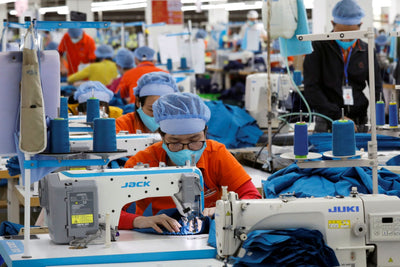
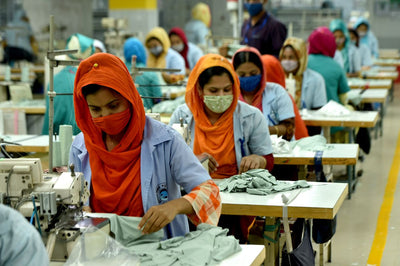
But many of the horror stories about direct Asian sourcing come from brands that tried to manage the relationship themselves—sourcing a factory off Alibaba, sending a brief over email, and hoping for the best. That is a different proposition from working with an established OEM manufacturer that has its own on-the-ground quality control infrastructure across multiple Asian markets. The Asia-based textile and apparel industry is becoming ever more global, mature, and advanced—the factories that have survived and grown over the last decade are not the same operations that gave direct sourcing a bad reputation in the early 2000s.
The risk of poor quality is real. The risk of poor quality when working with a vetted, long-standing OEM partner with in-house QC teams is considerably lower. Those are two very different situations.
Why the OEM Model Makes More Sense Than It Did Five Years Ago
The outdoor fashion accessories category has changed in ways that favour the OEM sourcing model. During 2024 and 2026, outdoor apparel and accessories experienced a surge in personalised product offerings—brands introducing customisation for colour combinations, monogramming, and bespoke designs. This trend resonated strongly with younger demographics and outdoor enthusiasts seeking individuality in performance-oriented gear. A UK wholesaler cannot deliver that. An OEM manufacturer can.
At the same time, fashion companies increasingly expect suppliers to accommodate last-minute order changes, accept lower minimum order quantities, and offer other value-added services. The better Asian OEM operations have responded to this. The ones worth working with now offer faster sampling, multi-country production flexibility, and compliance documentation as standard—not as an expensive add-on.
UK firms are increasingly favouring supply partners capable of rapid rerouting, real-time emissions tracking, and fully digital documentation—which is part of why Hong Kong-based sourcing hubs with operations across multiple Asian markets are attracting growing attention from British procurement teams. A manufacturer with offices and factories across Bangladesh, Vietnam, China, and Myanmar is not just cheaper than a UK wholesaler. It is more resilient, because production can shift between markets based on capacity, cost, and compliance requirements at any given time.
For UK outdoor fashion e-commerce brands specifically, the category lends itself well to OEM sourcing. Headwear, bags, and outdoor accessories are exactly the kind of products—high visual differentiation potential, manageable production complexity, strong brand identity value—where having your own custom-manufactured line creates a genuine competitive moat. You are no longer competing on price against brands selling identical wholesale products. You are competing on product, and that is a fight worth having.
What to Actually Look For in an Asian OEM Partner
Assuming you have decided the direct OEM route makes sense for your outdoor accessories brand, the partner selection question matters more than almost anything else. A few things separate the operations worth working with from the ones that will cost you more than a UK wholesaler ever would.
Speed of response is a reliable early signal. A manufacturer that takes two weeks to respond to an initial enquiry will probably take two weeks to respond to a production problem mid-run. The better operations tend to quote fast—within 24 hours for standard product categories—because they have the infrastructure to do it.
On-the-ground quality control is non-negotiable for brands that care about consistency. The difference between a manufacturer that relies on factory self-reporting and one with dedicated third-party or in-house QC inspectors physically present during production is enormous. Headwind Group, for example, operates over 30 quality-control inspectors across Asia who manage on-site inspection of goods before shipment—that kind of infrastructure is what bridges the gap between the theoretical risk of international sourcing and the practical reality of receiving consistent product.
Multi-country production capability matters for resilience. A manufacturer locked into a single country is exposed to the same geopolitical and logistics risks that have disrupted supply chains repeatedly over the last few years. Nearly 60% of fashion companies plan to source from even more countries in 2026 precisely because single-source dependency is a structural vulnerability.
A meaningful quality guarantee is the final filter. Most manufacturers will tell you their quality is excellent. Fewer will back that claim with a replacement guarantee. Headwind Group’s 100% replacement guarantee is the kind of commitment that changes the risk calculus for a UK e-commerce brand—it means the downside of a quality failure is covered, which removes one of the most cited reasons for staying with domestic wholesale.
Founded in 1980 and operating with a team of over 100 merchandisers, engineers, quality control experts, and designers across Hong Kong, China, Vietnam, Bangladesh, and Myanmar, Headwind Group is the kind of OEM partner that removes most of the operational friction UK brands associate with direct Asian sourcing. For outdoor fashion accessories—custom bags, branded headwear, outdoor leisure products—the combination of multi-market production, in-house QC, and guaranteed replacement is a meaningfully different proposition from cold-calling factories through a directory.
So, Is It Worth It?
For a UK e-commerce brand doing meaningful volume in outdoor fashion accessories—say, consistent monthly orders rather than one-off buys—the direct OEM route almost certainly makes financial and strategic sense. The margin difference between wholesale and direct manufacturing is typically substantial enough to either improve profitability significantly or fund the kind of product investment that separates growing brands from stagnant ones.
The caveat is execution. Going direct without the right partner is genuinely risky. Going direct with an established OEM manufacturer that has multi-country production, on-site QC, and a track record spanning decades is a different proposition. The risk profile looks much more like a managed supply chain decision than a leap into the unknown.
The outdoor apparel and accessories market is projected to grow at a 6.9% CAGR from 2026 to 2036, and the UK is part of that growth story. The brands that build durable positions in this market will probably be the ones that control their product rather than reselling someone else’s. That control starts with the sourcing decision—and for most brands at any meaningful scale, it starts with going direct.