How to Start Selling Custom Branded Merchandise Online: A Step-by-Step Guide for E-Commerce Brands
The Part Most Guides Skip: Your Manufacturer Comes Before Your Store
Most e-commerce guides start with picking a Shopify theme or writing product descriptions. That’s the wrong order. Before you write a single word of copy or upload a logo, you need to know who is making your products and what it will actually cost to get them into a customer’s hands.
Custom branded merchandise — headwear, bags, apparel, drinkware — is a category where the supply chain decision shapes everything downstream: your margins, your lead times, your minimum order quantities, and ultimately whether your store is profitable in year one or year three.
So the first real step is understanding what kind of manufacturing relationship you’re entering into.
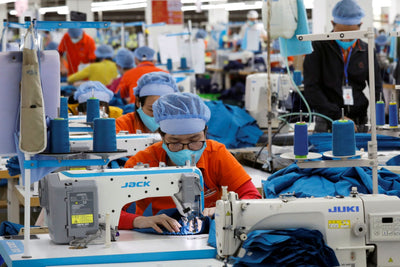
OEM (Original Equipment Manufacturer) manufacturing means a factory produces goods to your specifications — your design, your materials, your branding. In OEM apparel manufacturing, the factory manufactures garments based on the brand’s own designs, technical specifications, and quality requirements, while the brand retains full creative control and the OEM partner handles material sourcing, production, and delivery. This is the model used by most serious e-commerce brands that want to own their product identity rather than resell generic items.
Private label products are items manufactured by a company and then branded and sold under a retailer’s brand. Sellers often work closely with private label manufacturers to develop unique products tailored to their vision, and this approach provides greater flexibility and a wider range of customization options, although it can cost more to produce and require minimum orders.
For brands that want to test the water first, print-on-demand (POD) is a lower-commitment alternative. Print on demand produces each product only after a customer places an order, which lets you make your own merch without risk — no inventory or upfront costs. POD works well for validation, but the per-unit costs are significantly higher than bulk OEM production, which tends to compress margins as you scale.
The decision between POD and OEM usually comes down to volume and brand ambition. If you’re testing whether an audience will buy your merch at all, POD makes sense. If you already have demand — or you’re building a brand that competes on product quality — OEM manufacturing with a sourcing partner is worth the additional upfront work.
Choosing a Product Category That Fits Your Brand (and Your Customer)
Merchandise that sells well tends to be merchandise that people use in public. A tote bag, a structured cap, a hoodie — these items do double duty as products and as walking advertisements for your brand. Good quality merch naturally promotes itself. When fans purchase and wear or use your merchandise, they automatically engage in word-of-mouth marketing, which can amplify your brand’s visibility.
The category you choose should follow your audience, not your instincts. Consider your target demographic and what’s popular with them. If your customers are mostly Gen Z, hoodies and joggers might be a great option because comfort is of utmost importance. If your target market is seniors, health and wellness items, notepads, or tote bags might be a better draw.
For most e-commerce brands entering custom merchandise in 2026, the practical starting point is a tight product range — two or three SKUs — rather than a sprawling catalog. This keeps inventory risk manageable and makes quality control easier to execute. Headwear (structured caps, beanies, bucket hats), tote bags, and basic apparel are consistently strong entry points because they have broad demographic appeal, low per-unit weight for shipping, and established OEM manufacturing infrastructure across Asia.
Once you know your category, you can start thinking about decoration methods. Embroidery uses thread to stitch bold logos or text onto hats, polos, denim jackets, and more — it’s the standard for premium-positioned headwear and corporate merchandise. Screen printing and sublimation work better for all-over graphics on apparel. The method you choose affects both the manufacturer you need and the price point your product can credibly support.
Finding and Vetting an OEM Manufacturer or Sourcing Partner
This is where most first-time merchandise brands lose months of time and sometimes significant money. The internet is full of directories, but a directory listing tells you almost nothing about whether a factory can actually execute your spec at your volume.
When evaluating a manufacturer or sourcing agent, the practical checklist looks like this:
- Minimum order quantities (MOQs): Minimum order quantities vary by manufacturer but typically range from 100 to 1,000 pieces. For headwear specifically, some manufacturers operate at lower thresholds — Headwind Group, for example, offers an MOQ of 144 pieces for caps, which gives newer brands meaningful flexibility.
- Sample lead times: Sample approval typically takes 1–2 weeks (since designs exist in OEM), with bulk production running 3–5 weeks depending on quantity. Any factory quoting dramatically shorter timelines without caveats deserves scrutiny.
- Quality control infrastructure: Ask specifically how QC is handled — whether inspectors are on-site at the factory or whether inspection is done remotely or post-production. Request samples from potential manufacturers to assess the quality of their work, which gives you a firsthand look at the materials, printing techniques, and overall craftsmanship.
- Communication responsiveness: Use a trial period to see if a partner meets deadlines, produces quality products, responds to emails in a timely manner, and is all-around reliable.
- Replacement or defect policies: A manufacturer willing to back their output with a concrete guarantee is worth more than one that offers the lowest quote.
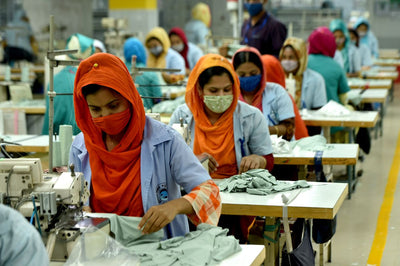
For US-based e-commerce brands, geography matters more than it used to in 2026. COGS volatility from tariff changes is a real factor this year. Brands sourcing from affected regions should model worst-case scenarios into their margin projections. Bangladesh, Vietnam, and India have emerged as cost-competitive manufacturing hubs with favorable tariff treatment for many product categories compared to China.
Headwind Group has operated as an OEM manufacturer and sourcing agent since 1980, with factories and offices across Bangladesh, Vietnam, Myanmar, India, and China. Headwind has over 30 quality-control inspectors across Asia who manage on-site inspection of goods to ensure quality standards are met. For businesses currently sourcing from China, Bangladesh offers a cost-effective and proficient alternative, with the added benefit of tariff-free caps, providing significant cost savings for US customers. The 24-hour quote turnaround and 100% replacement guarantee make the sourcing process more predictable for brands that are new to OEM production.
Pricing Your Merchandise to Actually Make Money
Pricing custom merchandise is where optimism tends to collide with reality. The product cost from your manufacturer is just the starting point — not the number you divide into your retail price.
A complete cost-per-unit calculation for custom branded merchandise includes: the manufacturing cost, inbound freight and customs duties, quality inspection fees (if third-party), 3PL or warehouse receiving fees, payment processing (typically 2.9% + $0.30 per transaction), and your customer acquisition cost.
A 40% profit margin has become the standard benchmark for custom merchandise businesses in 2026. Most sellers land between 30% and 50%, with budget-focused shops operating closer to 30% on high volume, and premium or niche brands reaching 50%+ through higher perceived value.
Businesses with private-label or self-produced items typically maintain healthier margins because they control sourcing and pricing more effectively. This is one of the structural advantages of OEM manufacturing over reselling — when you own the product design and the manufacturer relationship, you have more levers to pull on cost.
Average e-commerce markup is 2–5x manufacturing cost. DTC brands typically price at 4–8x COGS. For branded merchandise, the higher end of that range is achievable when the product quality and brand positioning justify it. A custom structured cap manufactured at $6–8 per unit can credibly retail at $28–40 when the branding, packaging, and product quality are consistent.
Build your pricing model before you finalize your product spec — not after. Knowing your target retail price and working backward to your acceptable COGS is a much cleaner process than falling in love with a product and then discovering the margin math doesn’t work.
Setting Up Your Shopify Store and Getting Your First Sales
Once your product is confirmed, sampled, and priced, the store setup is relatively straightforward. Shopify remains the dominant platform for branded merchandise e-commerce in 2026 because of its ecosystem of apps, its native integration with 3PLs and fulfillment services, and the relatively low technical barrier to launch.
Choose an e-commerce platform that suits your needs. Popular options include Shopify, WooCommerce, and BigCommerce. Consider factors such as ease of use, customization options, and available features.
For merchandise specifically, a few store setup decisions matter more than others:
Product photography is not optional. Custom merchandise is a tactile category — customers are buying something they’ll wear or carry in public, and flat lay images against a white background don’t communicate quality. Order samples before your full production run, shoot lifestyle photography, and use those images as your primary product visuals.
Sizing and spec transparency reduces returns. For apparel and headwear, include measurements, not just S/M/L labels. Returns in apparel can quietly compress margins — apparel struggles with sizing issues, and each return creates multiple losses: shipping fees, refunds, and sometimes unsellable inventory. Industries with higher return rates almost always see lower net profit margins.
Your first traffic channel should be one you can control. Paid social (Meta, TikTok) is the fastest way to generate data on whether your product and price point resonate, but it’s also the most expensive. Email marketing to an existing audience — if you have one — tends to produce the highest initial conversion rates for merchandise launches because you’re selling to people who already know your brand. Marketing merchandise is different from selling a typical product. You’re targeting existing fans who already have a connection and a positive attitude toward your brand.
And once the orders start coming in, the operational side of the business becomes the constraint. Your manufacturer’s lead time, your 3PL’s receiving and fulfillment speed, and your customer communication all need to work in sync. Brands that get this right in the first 90 days tend to build the kind of repeat purchase behavior that makes merchandise a durable revenue stream — not just a launch spike.
If you’re at the stage of sourcing your first custom merchandise run and want to understand what’s possible at your volume, Headwind Group’s apparel and headwear manufacturing capabilities are worth exploring. With factories across Asia, on-site QC teams, and a 24-hour quote process, they’re built for brands that need a reliable OEM partner without the complexity of managing multiple suppliers across different countries.