How to Start Selling Custom Branded Merchandise Online: A Step-by-Step Guide for E-Commerce Brands
The Margin Gap Nobody Tells You About Up Front
Most people who start a custom merchandise brand spend their first six months discovering a problem they could have anticipated: the production model they chose was designed for convenience, not profitability.
Print-on-demand (POD) is the obvious entry point. Zero inventory, no upfront cost, orders fulfilled automatically. But net margin for POD sellers, after production, shipping, marketplace fees, transaction fees, and marketing, typically lands between 15–35% depending on the product. And that’s the optimistic end. T-shirts — still the bread and butter of POD — are where margins get squeezed hardest, with apparel sitting in the 15–20% range for most sellers. Once you add paid acquisition costs, the math on a $28 tee gets uncomfortable fast.
OEM manufacturing — where you own the design and contract a factory to produce finished goods to your spec — inverts that structure. You carry inventory risk, but profit margins on screen-printed t-shirts produced through OEM channels range from 40% to 60%. That spread funds real marketing budgets, absorbs returns, and still leaves room to build a brand. The tradeoff is real: you need to commit to a minimum order quantity and manage a supply chain. But for any brand serious about merchandise as a revenue line rather than a side experiment, it’s the model that scales.
Understanding this gap before you spend anything is the most valuable thing this guide can give you. Everything else follows from it.
Brand Identity Before Product Selection — In That Order
A common sequencing mistake: founders pick a product they like, then try to build a brand around it. The result is a store with no coherent identity, where a trucker hat and a tote bag feel like they came from different companies.
Start with the brand. Specifically, answer three questions before you touch a product catalog. Who is this for, and what do they already buy? What visual language — color palette, typography, graphic style — will make someone recognize this brand at a glance? And what does this brand stand for beyond the product itself? That last question matters more than it used to. Demand for customized apparel is rising as people look for clothing that reflects their identity, values, and affiliations — and this shift is driving businesses to move away from generic promotional products and invest in branded merchandise that people actually want to wear.
Once you have clear answers, product selection becomes a filter rather than a brainstorm. You’re not asking ‘what should we sell?’ You’re asking ‘which products fit this brand well enough that someone would wear or carry them in public?’ That’s a much narrower and more useful question. A gym-focused brand probably sells performance headwear and water bottles before it sells tote bags. A creative studio brand might lead with structured caps and canvas accessories. The product mix should feel inevitable given the brand — not arbitrary.
For the visual identity itself, keep it production-ready from day one. Logos that look clean on a screen often don’t translate to embroidery or screen printing. Before finalizing any design, run it through a few practical tests: How does it look at one inch? Does it work in a single color? Can it be embroidered on a structured cap without losing detail? Answering these questions early saves expensive sample iterations later.
Choosing Products That Actually Move
The branded merchandise market is large enough that product selection mistakes are easy to hide — until you’re sitting on 500 units of something nobody wants. According to HTF Market Intelligence, the global branded merchandise market is projected to grow from $74.5 billion in 2026 to $168.9 billion by 2033, at a CAGR of 9.60%. Growth at that rate means almost every category has demand. The problem isn’t finding a product that sells somewhere — it’s finding a product that your specific audience will buy from your specific brand.
A few things consistently predict merchandise sell-through. Wearability in public is the strongest signal: headwear, outerwear, and bags all get worn outside the house, which means they carry your brand into new contexts every time someone puts them on. Research shows that 85% of people remember the name of a company that gave them custom clothing — far higher recall than traditional advertising. Products that stay home (mugs, desk accessories) can work, but they don’t do the same ambient marketing work.
Utility is the second filter. Products people use regularly — caps, tote bags, water bottles, hoodies — have a natural reorder dynamic and tend to generate more social sharing than novelty items. The shift toward premium branded merchandise is real: companies now order premium custom water bottles at $45 each, laser-engraved bamboo wireless chargers at $65 each, and GOTS-certified organic cotton tote bags at $18 each, reflecting a broader move from commodity giveaways to products people actually want.
Start with two or three SKUs that represent your brand clearly. Validate them with a small production run before committing to large quantities. The signal you’re looking for isn’t just sales volume — it’s repeat purchases and organic sharing. Those two metrics tell you whether the product has earned a place in your catalog long-term.
Finding and Vetting an OEM Manufacturing Partner
This is where most e-commerce brands lose money they didn’t know they were spending. A manufacturer who quotes low and delivers inconsistently costs far more than one who quotes fairly and ships on spec. The difference rarely shows up in the initial conversation — it shows up in your third production run, when colors drift, stitching loosens, or lead times quietly expand.
The vetting process for an OEM partner should cover five areas. First, production history in your specific category. A factory that excels at bags may not have the machinery or expertise for structured headwear. Ask for samples from recent runs, not just photos. Second, minimum order quantities that match your current scale. Committing to 5,000 units before you’ve validated demand is how brands end up with warehouse problems. An MOQ of 144 pieces offers flexibility whether for large-scale distribution or smaller, custom orders — this kind of graduated MOQ structure is worth looking for specifically, since it lets you test products without overcommitting capital.
Third, on-site quality control. Reviewing finished goods photos before shipment is not quality control — it’s a courtesy check. Actual QC means inspectors physically present during production, catching defects before they’re packed. Over 30 quality-control inspectors across Asia managing on-site inspection of goods to ensure quality standards are met is the kind of infrastructure that prevents the expensive surprise of receiving a full shipment that doesn’t match your approved sample.
Fourth, response time and communication. A manufacturer who takes five days to answer a basic question about fabric weight will take three weeks to resolve a production problem. Ask for a quote on a real project and time the response — it tells you more than any sales pitch. A 24-hour quote turnaround is a reasonable benchmark for a manufacturer who’s organized enough to handle your business reliably.
Fifth, defect policy. Occasional errors are inevitable — clarify who covers the cost of incorrect or defective items, including shipping and duties fees. A manufacturer who offers a 100% replacement guarantee on defective goods is signaling confidence in their own process. One who hedges on this question is telling you something important.
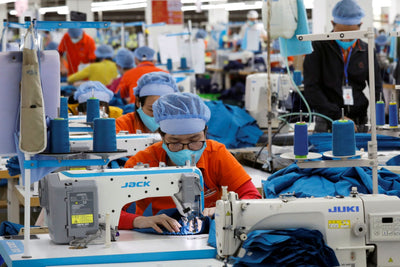
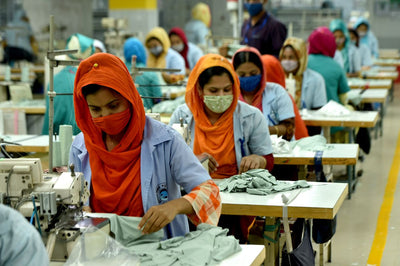
Headwind Group, a Hong Kong-based OEM manufacturer operating factories in Bangladesh, Vietnam, Myanmar, India, and China, covers headwear, bags, apparel, drinkware, and accessories — the core categories most merchandise brands need. For businesses currently sourcing from China, Bangladesh presents a cost-effective and equally proficient alternative — and importantly, Bangladesh offers tariff-free caps compared to China, providing significant cost savings for US customers. For US-based e-commerce brands, that tariff structure matters at scale.
Setting Up Your Shopify Store for Merchandise
Shopify is the right platform for most branded merchandise brands, not because it’s the only option, but because its ecosystem — payment processing, inventory management, shipping integrations, and analytics — is mature enough that you’re solving business problems rather than technical ones.
The store setup decisions that matter most for merchandise are product photography, pricing architecture, and collection organization. Photography for merchandise is different from fashion photography: you want context shots that show the product in use, not just on a white background. A cap worn on a hike, a tote bag carried through a market, a hoodie worn at a coffee shop — these images do more conversion work than a flat lay, because they answer the implicit question every buyer is asking: ‘Does this fit my life?’
Pricing should reflect your production model honestly. If you’re running OEM production with 40–60% margins, you have room to price at a level that signals quality rather than racing to match POD competitors on price. Brands that underprice merchandise tend to attract buyers who won’t become loyal customers — they bought once because it was cheap, not because they connected with the brand.
Collection organization should mirror how your customer thinks, not how your inventory is structured. Organize by use case or product type, not by production batch or SKU number. A visitor who lands on your store should be able to find what they’re looking for in two clicks.
For traffic, the channels that work best for merchandise brands tend to be organic social (particularly platforms where visual content performs — Instagram and TikTok in 2026), email to an existing audience if you have one, and targeted paid ads once you have validated products and know your cost-per-acquisition. Personalization leads to a 20% increase in sales for custom merchandise stores, so even basic personalization — letting buyers choose colorways, add names, or select bundle options — is worth building into your store structure from the start.
The Operational Details That Decide Whether This Works
Two things kill merchandise brands that have otherwise done everything right: inventory forecasting and fulfillment consistency.
Inventory forecasting for a new brand is partly guesswork, but it’s informed guesswork. Your first production run should be conservative — enough to test demand without overcommitting. Track sell-through rates weekly, not monthly. A product that sells out in three weeks and has a four-week production lead time will have a gap in availability that costs you customers who found you at the right moment. A product that sits for six months ties up capital and creates pressure to discount, which erodes brand positioning.
Fulfillment consistency matters more than fulfillment speed for branded merchandise. Buyers buying a $45 custom cap are not expecting Amazon Prime delivery windows — they’re expecting the product to arrive in good condition, packaged in a way that matches the brand’s positioning, and exactly as described. High-quality merchandise can contribute to your brand’s reputation, while poor-quality items can sell your company short — and as branded merchandise contributes to customers’ first impression of your business, special care must be taken to ensure quality, safety, and compliance.
Custom packaging is worth the cost earlier than most brands think. A branded tissue paper, a thank-you card, or a hang tag with your brand’s story costs very little per unit at OEM quantities but meaningfully affects how customers talk about the unboxing experience. In a category where word-of-mouth and social sharing drive a significant share of new customer acquisition, the packaging is part of the product.
Finally, build a returns and replacement policy before you need one. Decide in advance what you’ll do when a customer receives a damaged item, a wrong size, or a product that doesn’t match the product page photos. The answer should almost always be ‘replace it without friction.’ The cost of a replacement unit is far lower than the cost of a negative review or a lost repeat customer — and your OEM partner’s defect policy should make that math work in your favor.