How to Shop OEM Apparel & Accessories for Germany: A Step-by-Step Guide
A German retailer once received a full container of custom hoodies — wrong label language, no OEKO-TEX certification, care symbols that didn’t match EU standards. Customs held the shipment for three weeks. By the time the goods cleared, the seasonal window had closed. The manufacturer refunded nothing.
That story repeats itself more often than it should, and it’s almost always the result of skipping steps that seem optional until they aren’t. Sourcing OEM apparel and accessories for the German market is genuinely achievable for brands at any scale, but Germany sits inside one of the most demanding regulatory environments in global retail. REACH compliance, GPSR obligations, trilingual labelling requirements — these aren’t paperwork formalities. They’re the difference between product on shelves and product in a bonded warehouse.
This guide walks through the full sourcing journey in sequence, from writing your brief to shipping cleared goods.
Step 1: Write a Product Brief That Leaves No Room for Guessing
The most common sourcing mistake isn’t choosing the wrong factory — it’s handing a vague brief to the right one. Manufacturers quote what you give them. If your brief says “hoodie, 300 GSM, navy,” you’ll get 40 interpretations of navy and a range of GSM deviations that vary by 20 points in either direction.
A useful product brief for German-market OEM sourcing should include:
- Exact material composition (e.g., 80% organic cotton, 20% recycled polyester — not just “cotton blend”)
- Pantone colour references, not descriptive names
- Construction specifications — stitching density, seam type, hardware finish
- Target retail price and acceptable FOB cost range
- Certification requirements — OEKO-TEX Standard 100, GOTS, REACH compliance, or specific chemical substance restrictions under the EU’s SVHC list
- Labelling requirements — German requires care instructions in German; if you’re selling across the EU, you’ll likely want German, French, and one additional language minimum
- MOQ tolerance — what’s your floor if the manufacturer pushes back?
The more specific this document, the closer your first sample will be to your approved standard. Factories that see detailed briefs also tend to treat those orders with more seriousness — a precise brief signals a professional buyer.
Step 2: Identify OEM Manufacturers With Genuine EU Export History
Not every factory that lists “EU export” on its website has actually navigated REACH audits, issued EU-format test reports, or worked with German customs procedures. The distinction matters.
When evaluating potential manufacturers, ask directly: which EU countries have they shipped to in the past 24 months, and can they provide documentation from those shipments? Specifically, ask for third-party lab test reports from INTERTEK, SGS, or Bureau Veritas — these are the three testing houses German buyers typically recognise. A manufacturer claiming OEKO-TEX compliance should be able to show you a valid certificate with a transaction reference number you can verify on the OEKO-TEX website.
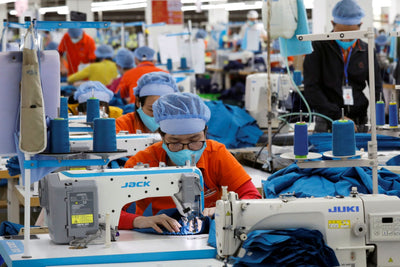
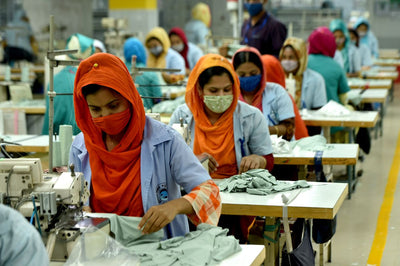
Regional manufacturing presence also matters for lead time and communication. Factories in Bangladesh, Vietnam, and India have substantial EU export infrastructure built over decades — many hold social compliance certifications like BSCI or amfori, which some German retailers now require for supplier onboarding.
Headwind Group, for instance, operates production facilities across Bangladesh, Vietnam, Myanmar, India, and China, and has worked with global brands exporting into EU markets. Their 30+ on-site QC inspectors across Asia are positioned to catch compliance issues before goods leave the factory floor — which is precisely when problems are cheapest to fix.
Step 3: Request Quotes and Read Them Carefully
The 24-hour quote turnaround that Headwind offers is worth taking advantage of: you can send the same brief to three or four manufacturers simultaneously and have comparable quotes on your desk within a business day. The comparison, though, requires some discipline.
OEM quotes for German-market orders often hide costs in a few predictable places. Testing fees are sometimes excluded from the FOB price and invoiced separately — expect third-party lab testing for a full apparel range to run between $800 and $2,500 depending on the number of SKUs and tests required. Certification documentation (REACH test reports, OEKO-TEX certificates, or material safety data sheets) may also be treated as a separate line item.
Ask every manufacturer to confirm in writing whether their quoted price includes: third-party lab testing, all required EU certification documentation, compliant labelling in target languages, and sample production costs. If those items aren’t in the quote, get a separate figure for each.
Also clarify payment terms. Most Asian manufacturers work on 30% deposit, 70% against Bill of Lading. If a factory asks for 50% upfront with no production milestone tied to the balance, that’s worth probing.
Step 4: The Sampling and Approval Process
Don’t skip pre-production samples to save time. For Germany specifically, the sampling phase is where you validate both aesthetics and compliance.
A standard OEM sample sequence runs: Proto sample (first interpretation of your brief, usually in available stock material), Salesman sample (in correct materials but possibly slight spec deviations), and Pre-production sample or TOP sample (exact production specification, from actual production materials). German buyers and EU importers should approve at minimum the salesman sample and the TOP sample before bulk production begins.
When your TOP sample arrives, test it. Send it to a third-party lab independently — don’t rely solely on the factory’s own in-house test report. Test for pH levels, formaldehyde content, azo dyes, and nickel release from metal components. These are the most frequently flagged issues in EU customs inspections for apparel and accessories.
The turnaround from German customs when goods fail a chemical substance test isn’t days — it can be months, and the cost of destruction or re-export falls on the importer.
Step 5: EU Compliance — What Germany Specifically Requires
Beyond general EU directives, there are a few Germany-specific factors worth understanding. German retail is heavily regulated at the retail level through the Produktsicherheitsgesetz (ProdSG), the national implementation of the EU’s General Product Safety Regulation. As of 2026, the updated GPSR applies across the EU, requiring manufacturers and importers to ensure a responsible person is identifiable on or with every product placed on the EU market.
For apparel and accessories, the relevant compliance checklist typically includes:
Labelling: Textile Regulation (EU) 1007/2011 requires fibre composition labels in German when sold in Germany. Size labelling should follow EN 13402 or US/EU equivalent stated clearly. Country of origin must appear on the label or packaging.
Chemical safety: REACH Regulation restricts hundreds of substances. SVHC (Substances of Very High Concern) restrictions tighten periodically — check the ECHA candidate list as of your production date, not as of when you wrote your brief.
Responsible person: Since GPSR enforcement strengthened in late 2024, products without an identifiable EU-based responsible person can be refused at the German border or delisted from German e-commerce platforms including Amazon.de.
If you’re sourcing through an OEM manufacturer, clarify who handles the CE or compliance documentation and who is named as the responsible party for EU market placement. This is a structural question, not a checkbox.
Step 6: Quality Control Before Shipment
On-site QC inspection before goods leave the factory is the single highest-value intervention in the entire process. Catching a problem post-shipment — wrong colour, mislabelled content, missing certifications — costs orders of magnitude more than catching it during production.
A standard pre-shipment inspection checks: carton count and labelling, random sampling of finished goods against approved specs, measurement checks, stitching and construction quality, and label compliance. For German-market orders, add a specific check for language accuracy on all labels. A care symbol missing from a German-language label, or a German translation error in fibre content, can trigger complaints under the ProdSG.
Headwind’s network of 30+ on-site QC inspectors across its Asian production facilities means inspections happen at source, not after the fact. Their 100% replacement guarantee for defective goods reflects a quality process designed to back that promise — which is exactly the kind of structural protection worth looking for when shipping into a compliance-sensitive market.
Managing the Ongoing Relationship
After your first successful shipment, document everything that worked: your approved TOP sample, the lab test results, the exact factory, production line, and material batch. German retail buyers often conduct repeat orders with small spec adjustments, and having a documented baseline makes re-orders significantly faster and reduces the risk of quality drift between production runs.
Communication cadence matters here. Factories that work with multiple time zones — which Asian manufacturers always do — tend to be more reliable when there’s a named account manager rather than a general inbox. Establish a single point of contact on both sides and set a regular update schedule during production windows.
The German market rewards consistency. A single good collection shipped correctly builds more long-term retailer trust than three rushed seasons that each required problem-solving after arrival.
Sourcing OEM apparel for Germany isn’t uniquely difficult, but it does have a specific compliance overhead that catches brands off guard when they treat it like any other Western market. The work happens early — in the brief, in the sample stage, in the third-party lab report — and the brands that do it carefully tend to find the process repeatable. Those that skip the early steps tend to discover that German customs is not a place to improvise.