How to Order Branded Bags and Accessories in Bulk Wholesale for UAE Retailers and E-Commerce Brands
The UAE Bags Market Is Bigger Than Most Importers Realize
Fashion and accessories remain one of the strongest product categories in the UAE’s online retail economy. Personal accessories commanded a measurable share of UAE e-commerce sales, and apparel and footwear together have consistently ranked among the top categories for untapped online growth potential, according to the Dubai Chamber of Commerce. For brands and retailers sourcing branded bags in bulk, that demand signal matters — it tells you this is a market worth building inventory for, not just testing.
The UAE also functions as a regional re-export hub. Goods that arrive in Dubai don’t just stay there; they move across the GCC. That geographic reality shapes how smart sourcing decisions get made. A well-structured bulk order from an Asian OEM manufacturer — landed in Jebel Ali, cleared efficiently, and distributed from a Dubai free zone — can serve markets in Saudi Arabia, Kuwait, and Oman from a single supply chain. Getting the sourcing side right is therefore not just a cost exercise. It’s a logistics and market-reach decision.
Choosing the Right Manufacturing Origin for Your Order
Most branded bag orders destined for UAE retailers originate from factories in China, Bangladesh, Vietnam, or India. Each origin has a different cost profile, lead time, and compliance footprint — and the choice affects your UAE customs calculation directly.
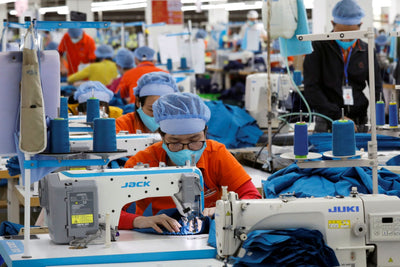
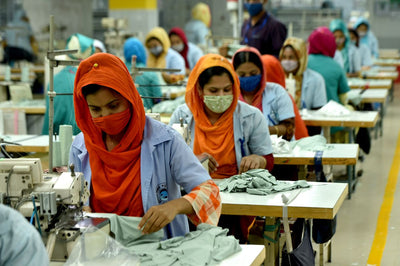
China remains the default for complex constructions, technical hardware (zippers, buckles, metal fittings), and large-run orders where tooling investment is justified. Vietnam has grown substantially as a secondary source for mid-range structured bags and accessories, with quality-control infrastructure that has matured considerably over the past decade. Bangladesh tends to offer the strongest price advantage on softer bag formats — tote bags, drawstring bags, canvas shoppers, and similar styles — particularly where labor intensity is high relative to material cost.
For UAE-bound shipments, the certificate of origin matters beyond just documentation. The GCC has preferential trade agreements with several countries, and duty rates can differ based on where goods are manufactured. Always verify the applicable HS code and origin-linked duty rate before committing to a factory location, since getting this wrong adds unexpected cost at the port.
Headwind Group operates manufacturing across China, Bangladesh, Vietnam, India, and Myanmar, with a bags and cooler collection that includes totes, backpacks, and cooler bags in materials ranging from polyester and recycled polyester to cotton and nylon. That multi-country footprint gives buyers flexibility to optimize for cost, tariff profile, or lead time depending on the order.
Understanding UAE Customs Before You Place the Order
Customs duty in the UAE runs at 5% of the CIF value (Cost, Insurance, and Freight combined) for most goods under the GCC Common Customs Law. VAT applies at the same 5% rate on top of the declared customs value, though businesses registered for VAT in the UAE can recover import VAT through their regular VAT return filing.
To import goods legally, your business needs a valid trade license from the Department of Economic Development (DED) in the relevant emirate, plus registration with the Federal Tax Authority if your taxable supplies exceed the mandatory threshold. You’ll also need an importer code — free zone companies register through their zone customs desk, while mainland firms register directly with the emirate’s customs department.
The standard documentation set for any bag or accessories shipment includes: a commercial invoice, packing list, bill of lading or airway bill, and certificate of origin. The certificate of origin is particularly important because it determines which duty rate applies and whether any preferential tariff under a GCC trade agreement is available.
One practical point many first-time importers overlook: if your goods transit through a third-party logistics hub before reaching the UAE, the certificate of origin must reflect the country where the goods were substantially transformed — not just the last port of departure. A well-organized OEM manufacturer will prepare this documentation correctly from the start, which is one reason working with an experienced Asia-based sourcing partner tends to reduce clearance delays.
For UAE free zone operators, the picture is slightly different. A free zone licensee can import goods without paying customs duty at the point of entry. Customs duty at 5% only applies when goods move from the free zone into the UAE mainland for domestic sale. This makes free zones like JAFZA at Jebel Ali particularly attractive for brands that want to hold regional inventory and distribute across the GCC without paying UAE duties on goods that will ultimately be re-exported.
How to Structure a Bulk Bag Order: MOQs, Samples, and Lead Times
Minimum order quantities for custom branded bags from Asian factories typically start at 300–500 pieces per style per color for simpler constructions, and can run higher for styles requiring custom tooling on hardware or structured frames. The range varies by factory and material — a basic cotton tote with screen-printed branding will have a lower MOQ than a technical backpack with custom zipper pulls and embroidered patches.
Before committing to full production, request a pre-production sample (PP sample). This is the manufacturer’s physical interpretation of your approved design, and it’s the point at which you confirm material, construction, hardware, and branding placement. Changes made after PP sample approval tend to add cost and delay. Build sample review time into your project timeline — typically two to three weeks from design approval to sample receipt, depending on origin country and shipping method.
Lead times for production after sample approval generally run four to eight weeks for standard bag styles, longer for more complex constructions or during peak factory seasons (typically October–December when factories are running at capacity for Western holiday orders). For UAE retailers working to stock shelves or fulfil pre-orders, factoring in sea freight transit time from Asia is essential. Shanghai to Jebel Ali by sea runs approximately 20–25 days; Chittagong (Bangladesh) to Jebel Ali is roughly 12–16 days; Ho Chi Minh City (Vietnam) to Jebel Ali runs about 14–18 days.
Headwind Group offers a 24-hour quote turnaround from design submission, which compresses the early-stage planning cycle considerably. Their custom bags and accessories are manufactured across their Asia factory network with on-site QC inspectors at each production location — a practical advantage when you need documented inspection reports for customs or retailer compliance purposes.
Quality Control: What to Require From Any Supplier
Branded merchandise going into UAE retail or e-commerce carries your brand name. A defective shipment doesn’t just create a returns problem — it creates a customer trust problem that takes longer to fix than the original order took to make.
At minimum, require your manufacturer to provide mid-production and pre-shipment inspection reports with photo documentation. For larger orders, an independent third-party inspection (AQL Level II is a common standard) gives you an objective view of defect rates before goods leave the factory. Most experienced OEM manufacturers will accommodate third-party inspectors; reluctance to do so is worth noting.
Headwind Group runs 30+ on-site quality control inspectors across its Asia facilities and backs every shipment with a 100% replacement guarantee on defects. For UAE buyers who are managing inventory risk across a long supply chain, that kind of guarantee changes the risk calculation meaningfully — it means defective units get replaced, not argued about.
Also confirm that your supplier can provide compliance documentation relevant to your target retail channel. Major UAE retailers and e-commerce platforms increasingly require supplier compliance certificates — particularly for bags that include materials like PVC, recycled content, or metal hardware that may be subject to substance restrictions under REACH or equivalent standards.
Practical Steps to Place Your First Bulk Order
The process tends to follow a predictable sequence, and knowing it in advance prevents the delays that come from going back and forth on basics.
Step 1 — Define your product brief. Specify material, dimensions, construction, hardware, branding method (embroidery, screen print, woven label, heat transfer), color, and target unit cost. The more specific the brief, the more accurate the initial quote.
Step 2 — Get a quote with lead time. A reliable manufacturer should be able to return a detailed quote within 24 hours of receiving a complete brief. The quote should specify unit price at your target quantity, sample cost (usually credited against production), lead time from sample approval, and payment terms.
Step 3 — Review and approve the sample. Don’t skip this step to save time. The sample is your quality benchmark and your protection if the production run deviates.
Step 4 — Confirm documentation requirements. Before production starts, confirm what documents you’ll need for UAE customs clearance: commercial invoice format, certificate of origin (and from which chamber of commerce it should be issued), packing list format, and whether your retail channel requires any additional compliance certificates.
Step 5 — Arrange freight and customs clearance. Decide between sea freight (lower cost, longer transit) and air freight (faster, higher cost per kg). For bulk bag orders, sea freight to Jebel Ali is almost always the economical choice. Appoint a UAE-licensed customs broker to handle clearance — they’ll submit the declaration through Dubai Trade’s Mirsal 2 system or the Abu Dhabi ATLP platform, depending on your port of entry.
Step 6 — Inspect before shipment. Conduct or commission a pre-shipment inspection at the factory before goods are loaded. This is your last practical opportunity to catch issues before the shipment is on the water.
For brands that want a single point of contact managing design, production, QC, and documentation across multiple Asian factory locations, a sourcing partner like Headwind Group — operating out of Hong Kong with offices in China, Bangladesh, Vietnam, and Myanmar — handles the full chain from concept to delivery. That matters particularly for UAE buyers who don’t have a local team in Asia to manage factory relationships directly.