How to Order Branded Bags and Accessories in Bulk Wholesale for UAE-Based Businesses
What UAE Buyers Actually Need to Know Before Placing a Bulk Order
Most sourcing guides written for UAE buyers assume you already know which factory you want and just need a checklist. The reality is messier: the decision about where to source — Bangladesh, China, Vietnam, India — shapes everything downstream, from unit cost to lead time to customs documentation. Getting that foundational choice right is where the process either goes smoothly or falls apart.
The UAE is one of the world’s most active import markets. Its position as a crossroads between Asia, Africa, and Europe makes it a natural hub for goods flowing from manufacturing-heavy countries in South and Southeast Asia. For branded bags and accessories specifically — tote bags, backpacks, cooler bags, promotional pouches, branded accessories — Asia-sourced products dominate the market at every price tier.
But “sourcing from Asia” is not a single decision. It’s a series of choices: which country, which type of manufacturer (factory-direct or through a sourcing agent), what customization depth you need, and how you plan to handle logistics into Jebel Ali or Abu Dhabi’s Khalifa Port. This guide walks through each of those decisions in practical terms.
Choosing the Right Supplier: Factory-Direct vs. Sourcing Agent
The first fork in the road is whether to work directly with a factory or go through a sourcing agent or OEM manufacturer that manages production on your behalf.
Factory-direct sourcing tends to work well when you have a dedicated product development team, existing relationships in a specific manufacturing region, and the internal capacity to handle quality control, compliance documentation, and production follow-up. The cost per unit can be lower, but the operational burden is higher.
An OEM manufacturer or sourcing agent consolidates those functions. They manage the factory relationship, handle on-site quality inspections, coordinate sampling, and often provide end-to-end delivery to your warehouse. For UAE-based businesses that don’t maintain a sourcing office in Asia, this model usually makes more practical sense — particularly for orders spanning multiple product categories like bags, headwear, and accessories together.
When evaluating any supplier, the criteria that matter most are: factory audit history or third-party certifications (BSCI, SEDEX, ISO), in-country quality control presence, track record with international buyers, sample turnaround time, and the clarity of their defect and replacement policy. A supplier that won’t commit to a replacement guarantee in writing is a red flag regardless of how competitive their pricing looks.
Headwind Group, which has operated factories and offices across Bangladesh, Vietnam, China, India, and Myanmar since 1980, manufactures bags, apparel, headwear, and accessories for e-commerce brands and promotional product companies globally. Their model — with over 30 on-site QC inspectors across Asia and a 100% replacement guarantee on every shipment — is structured specifically for buyers who need reliable output without managing the factory floor themselves.
Minimum Order Quantities: What to Expect and How to Negotiate
MOQs for branded bags and accessories sourced from Asia vary widely depending on the product type, material complexity, and how much customization is involved.
For simple tote bags with a single-color logo print, factory MOQs in Bangladesh or China typically start around 300–500 pieces per style. For structured backpacks with multiple compartments, branded zippers, and full custom lining, MOQs tend to run higher — often 500 to 1,000 units — because the tooling and setup costs are spread across the run. Accessories like branded pouches, wallets, or travel organizers fall somewhere in between.
Headwind’s headwear lines, for context, carry a 144-piece MOQ — a figure that reflects the flexibility possible when a manufacturer maintains large fabric inventories and can absorb smaller setups without penalty. Bag MOQs vary by style and complexity, so the best approach is always to send your spec sheet and request a quote directly.
One practical note: UAE buyers ordering for promotional campaigns, corporate gifting, or retail distribution often find that splitting an order across two or three bag styles within a single factory run gives them variety without blowing past their budget. A sourcing agent can consolidate these into one production order, which is more efficient than placing three separate factory orders.
Sample lead times for custom bags from Asia generally run 2–4 weeks. Production lead times after sample approval are typically 45–90 days depending on order volume and complexity. Build this into your planning calendar — particularly if you’re ordering for a specific event, season, or retail window.
Shipping from Asia to the UAE: Modes, Transit Times, and Landed Cost
Sea freight is the standard choice for bulk bag and accessory orders moving from Asia to the UAE. It offers the best cost-per-unit for shipments above roughly 2 CBM, and the UAE’s port infrastructure handles it efficiently. Jebel Ali Port in Dubai is the world’s largest artificial port with 67 berths, and Khalifa Port in Abu Dhabi is the most automated port in the Middle East — both well-equipped to handle container freight from major Asian manufacturing hubs.
Transit times from China to UAE ports average 12–18 days for FCL (Full Container Load) shipments, with LCL (Less than Container Load) running slightly faster at 10–16 days in some cases. From Bangladesh, transit times are broadly similar — typically 14–20 days depending on routing. Air freight cuts that to 2–5 days but at a significantly higher cost per kilogram, making it practical mainly for samples, urgent replenishments, or high-value small-volume orders.
On the cost side, sea freight rates in 2026 for a 20-foot container from China to the UAE are running in the $2,785–$3,454 range, with 40-foot containers holding relatively flat at $3,750–$5,250. LCL rates are approximately $57 per CBM. Air freight is currently around $4.00–$4.01 per kilogram for standard cargo. These figures fluctuate with fuel costs, seasonal demand, and geopolitical factors — the Strait of Hormuz situation in particular has introduced some volatility in Gulf shipping lanes in 2026, so building buffer time into your logistics plan is worth doing.
For buyers who want a simpler cost structure, DDP (Delivered Duty Paid) shipping bundles freight, UAE customs duties, and VAT into a single invoice. The UAE applies a standard 5% customs duty on the CIF (Cost, Insurance, and Freight) value of most imported goods, plus 5% VAT — so your landed cost is typically the product cost plus roughly 10% in duties and tax, plus freight. Businesses operating inside a UAE Free Trade Zone, such as JAFZA, can import goods without paying customs duties on stock that stays within the zone, though selling into the UAE mainland from a free zone does require customs clearance at that point.
Documentation required for UAE customs clearance on a bag and accessories shipment includes: a commercial invoice (with quantity, description, and declared value), a packing list with HS codes per line item, a certificate of origin, and a bill of lading or airway bill. Since January 2026, VAT-registered UAE importers using the reverse charge mechanism no longer need to issue a self-invoice — they retain the customs declaration, supplier invoice, and freight documents as proof for VAT reporting instead. Getting HS code classification right matters: incorrect codes can trigger fines and terminal delays.
What to Look for in a Supplier’s Quality Control Process
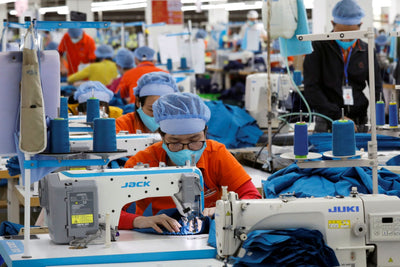
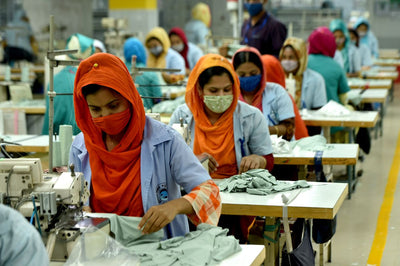
Quality control is where bulk orders from Asia either deliver on their promise or create expensive problems. The gap between a factory’s sample and its production run is where most quality failures happen — and it’s a gap that only consistent on-site inspection can close.
For UAE buyers, the practical question is: who is physically in the factory during production? A supplier based in Hong Kong or the US that relies on third-party inspection agencies for occasional audits is a different proposition from one that has dedicated QC staff embedded in the factory throughout the production run.
The specific things to verify before committing to a supplier: Do they conduct pre-production material checks? Do they run in-line inspections during production, not just a final inspection before shipping? What is their defect rate threshold, and what happens when shipments fall outside it? A 100% replacement guarantee — where the supplier replaces all defective units at no cost — is the gold standard and separates manufacturers who are confident in their output from those who are not.
For branded bags specifically, common quality checkpoints include stitching tension and thread consistency, zipper pull durability, print or embroidery registration accuracy, handle attachment strength, and lining integrity. These are the failure points that show up in returns and customer complaints — and they’re all preventable with the right QC process upstream.
How Headwind Group Serves the Middle East Market
UAE-based businesses sourcing branded bags, totes, backpacks, cooler bags, and accessories from Asia have a specific set of requirements that not every OEM manufacturer is set up to handle: multi-category ordering under one roof, reliable QC without the buyer needing to be on the ground in Asia, fast quoting, and a supplier that can manage the logistics chain through to delivery.
Headwind Group’s manufacturing infrastructure — factories and offices in Bangladesh, Vietnam, Myanmar, India, and China, coordinated out of Hong Kong — covers the full range of bag and accessory categories that Middle East buyers typically need. Their bag manufacturing capability spans totes, backpacks, cooler bags, and custom promotional bags, with the same 24-hour quote turnaround and 100% replacement guarantee that applies across their product lines.
For buyers who need apparel alongside bags — a common requirement for corporate gifting and promotional campaigns — Headwind’s apparel manufacturing operation runs in parallel, meaning a single supplier relationship can cover both categories without splitting the order across factories.
The Middle East market, including the UAE, GCC, and broader region, represents a growing segment for Asia-sourced branded merchandise. Promotional product companies, retail distributors, and e-commerce brands in Dubai and Abu Dhabi that are used to working with US or European sourcing intermediaries often find that going directly to an OEM manufacturer with established Asia infrastructure cuts both cost and lead time significantly — provided the supplier has the QC depth to back it up.