How to Buy Custom Embroidered Hats and Caps Online for Canadian E-Commerce Brands and Retailers
What Canadian E-Commerce Brands Actually Get Wrong About Hat Sourcing
Most Canadian e-commerce businesses that sell custom embroidered hats start the same way: they find a local decorator, pay $18–$25 per unit on a run of 48 pieces, and wonder why their margins look thin by the time the hats land at a 3PL. The problem is not the hat. It’s the sourcing model.
Domestic decorators — embroidery shops in Toronto, Vancouver, Calgary — are built for small, fast runs. They buy blank caps from a distributor at a markup, run your logo through an in-house machine, and charge per stitch count on top. That’s three margin layers before the product even reaches your warehouse. For a brand selling a custom dad hat at $45 CAD, paying $22–$28 landed per unit leaves almost no room for shipping, returns, or platform fees.
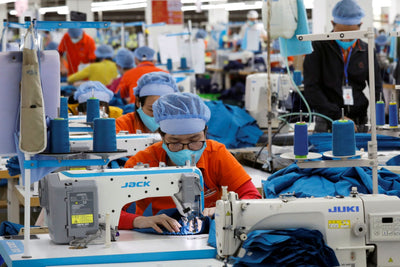
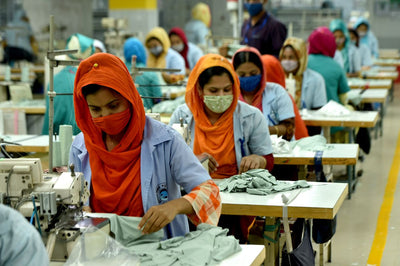
The alternative is going upstream — working directly with an OEM headwear manufacturer in Asia, where the blank and the embroidery come from the same facility, quality control happens on the floor, and per-unit costs at volume can drop to a fraction of domestic pricing. The catch is that this model requires more planning: longer lead times, minimum order quantities, and a clear brief before production starts. For brands willing to plan 8–14 weeks ahead, the math changes significantly.
This guide is written for Canadian e-commerce operators — Shopify brands, Amazon sellers, and multi-channel retailers — who are ready to move past one-off domestic orders and source custom embroidered headwear the way mid-market brands do.
Embroidery Techniques: What You’re Actually Choosing Between
Embroidery is not a single thing. The technique you choose affects cost, appearance, durability, and which cap constructions it works on. Getting this wrong at the brief stage means either a product that looks different from what you expected, or a back-and-forth sample cycle that adds weeks to your timeline.
Flat embroidery is the baseline. A design is stitched directly onto the cap face in a single plane, creating a clean, smooth finish. It handles intricate details well — thin lines, small text, gradients with enough thread colors — and works on virtually every cap style. It’s the most widely available technique and tends to be the most cost-effective at volume.
3D puff embroidery uses a foam insert placed under the top stitches to raise the design off the surface, giving logos and wordmarks a dimensional, tactile look. It’s popular on structured baseball caps and snapbacks where the flat front panel gives the foam space to sit properly. The trade-off is that fine detail gets lost at this scale — 3D puff works best for bold, simple shapes and block lettering, not for logos with thin lines or small type.
Metallic thread embroidery adds a reflective, shimmering finish using synthetic thread that mimics the look of metal. It photographs well and reads as premium, but it’s more prone to fraying over time than standard polyester thread, so it’s better suited to lifestyle and fashion headwear than to workwear or outdoor gear.
Beyond these three, some manufacturers offer woven patches, embroidered patches applied to the cap, and leather or silicone patch labels — each of which creates a different aesthetic. Woven patches handle fine detail better than direct embroidery and can be produced separately, then heat-sealed or sewn onto the cap. For Canadian brands building a premium or heritage positioning, patches tend to read as more considered than a direct-embroidered front panel.
When briefing a manufacturer, specify the technique, the stitch count estimate if you have it, the number of thread colors, and the placement (front panel, side, back, underbrim). Embroidery is billed by stitch count, not design complexity — a larger logo means more stitches and higher cost per unit, so keeping designs clean and appropriately sized is worth thinking about before you finalize artwork.
MOQs, Lead Times, and What the Numbers Actually Mean
The minimum order quantity question is probably the most common one Canadian brands ask when they start looking at OEM sourcing. The honest answer is that MOQ varies widely depending on the manufacturer, the cap construction, and whether you’re ordering a stock blank or a fully custom-built style.
For domestic Canadian decorators, many now offer no minimum or very low minimums — sometimes as few as one piece — because they’re embroidering onto blanks they already stock. That flexibility comes at a price premium. For OEM manufacturers building the hat from scratch in Asia, minimums tend to start higher because the economics of cutting, sewing, and finishing a custom product require a certain run size to be viable.
At the factory level, MOQs for custom embroidered caps typically start around 144–300 pieces per style and color for established manufacturers with stocked fabric programs, and can go higher for fully custom constructions with proprietary materials. Some manufacturers allow mixed-color runs against a single style MOQ, which helps brands that want to test colorways without committing to a single SKU at full minimum.
On lead times: samples typically take 1–2 weeks from design approval, with bulk production running 2–6 weeks depending on order size, complexity, and the factory’s current capacity. Air freight from Bangladesh or Vietnam to Canada adds roughly 7–12 days; sea freight adds 25–40 days but cuts shipping cost significantly for larger orders. A realistic planning window for a first-time OEM order — including the sample review cycle — is 10–14 weeks from brief to warehouse.
The cost difference at volume is where the OEM model earns its place. Basic caps with flat embroidery from a factory-direct source in Bangladesh or Vietnam can land in the $5–$12 USD range per unit depending on construction and order size, compared to $15–$25+ per unit from a domestic decorator on a small run. At a retail price of $40–$50 CAD, that difference translates directly into margin — or into room to price more competitively than brands still sourcing domestically.
One detail that matters specifically for Canadian buyers: Bangladesh-manufactured headwear currently enters the US tariff-free under preferential trade arrangements, and similar advantages apply for Canadian imports depending on the trade agreement in effect. This is worth confirming with your freight forwarder, but it’s one reason many North American brands have shifted cap sourcing to Bangladesh over the past several years.
What to Look for in an OEM Headwear Manufacturer
Choosing a factory is not the same as choosing a supplier. A trading company can place your order with a factory, but they add a margin layer and create distance between you and the people actually making your product. For e-commerce brands that depend on consistent quality across reorders, working closer to the source matters.
A few things worth verifying before placing a bulk order:
On-site quality control is probably the most underrated factor. Many factories self-certify, but the brands that avoid costly surprises tend to work with manufacturers who have dedicated QC inspectors physically present during production — not just at final inspection. This is especially relevant for embroidery, where thread tension, color matching, and placement can drift across a large run if nobody is checking mid-production.
Sample approval process: any credible OEM manufacturer will produce a pre-production sample for your sign-off before running bulk. If a supplier skips this step or discourages it, that’s a signal worth taking seriously.
Certifications: for brands selling into Canadian and US retail, BSCI, Sedex, or equivalent social compliance audits are increasingly expected by buyers. Oeko-Tex certification matters if your product positioning includes any sustainability angle. Ask for documentation, not just claims.
Response speed: a 24-hour quote turnaround is a reasonable expectation from a manufacturer with an established process. Long delays on basic questions tend to predict longer delays during production.
Headwind Group, a Hong Kong-based OEM manufacturer with 45 years of experience and factories operating in Bangladesh, Vietnam, and other Asian markets, offers custom embroidered headwear with an MOQ of 144 pieces, sample lead times of 1–2 weeks, and a 100% replacement guarantee on quality issues. Their Bangladesh facility specifically offers tariff advantages for North American buyers compared to China-sourced production, and they maintain over 30 on-site QC inspectors across Asia. For Canadian brands that want the pricing of direct manufacturing without managing an overseas factory relationship from scratch, this kind of established OEM partner is worth evaluating. You can explore their headwear manufacturing capabilities and browse their full product catalog to get a sense of styles and constructions available.
The Practical Sourcing Checklist for Canadian Brands
Before you send a brief to any manufacturer, domestic or overseas, having the following details locked down will save you at least one sample revision cycle:
Cap style and construction: structured vs. unstructured, panel count (5-panel, 6-panel), closure type (snapback, strapback, fitted, flexfit), brim style (curved, flat), and whether you need a sweatband or inner taping specification.
Fabric: cotton twill is the default for most branded caps. Polyester blends perform better for outdoor and athletic positioning. If you have a sustainability angle, recycled polyester or organic cotton are available from manufacturers with the right certifications.
Embroidery brief: technique (flat, 3D puff, metallic, patch), placement, approximate logo dimensions, thread color references (Pantone or thread color system), and stitch count estimate if available. Vector artwork files (AI, EPS, PDF) are preferred for digitizing.
Quantity and colorways: your total order quantity, broken down by style and color. If you’re testing multiple colorways, confirm whether the manufacturer allows mixed-color runs against a single MOQ.
Packaging: retail-ready packaging — poly bags, hang tags, custom labels — adds time and cost but matters if you’re selling direct-to-consumer or into retail accounts. Specify this upfront.
Timeline: work backward from your launch date. Account for sample approval (1–2 weeks), bulk production (2–6 weeks), and freight (1–6 weeks depending on air vs. sea). First-time orders almost always take longer than estimated, so build in buffer.
For Canadian e-commerce brands specifically, it’s also worth confirming the country of origin for customs purposes, especially if you’re selling cross-border into the US or importing from multiple origin countries. Your freight forwarder can advise on duty rates and any preferential trade agreement benefits that apply to your specific sourcing country.
The global headwear market is projected to grow from roughly $28 billion in 2025 toward $38 billion by 2031 — headwear remains one of the most accessible entry points for branded merchandise. Canadian brands that get the sourcing model right early, rather than scaling a domestic decorator relationship that was never designed for volume, tend to find that the margin improvement at 500+ units per run is material enough to change how they think about product development entirely.