Custom Fashion Merchandise for French E-Commerce Stores: OEM Sourcing vs. European Wholesale Suppliers Compared
The Sourcing Decision That Shapes Your Margin
French fashion e-commerce is moving fast. The market generated roughly USD $12.5 billion in online fashion revenue in 2025, with projections pointing toward continued growth into 2026 — and fashion and apparel account for over 21% of all French e-commerce spending. That scale means sourcing decisions made today compound quickly, either in your favor or against it.
For brands selling custom-branded fashion merchandise — custom caps, tote bags, branded hoodies, printed apparel — the first real fork in the road is this: do you source from European wholesale platforms that carry pre-made stock, or do you work directly with an OEM manufacturer in Asia who builds products to your specification? Both paths are legitimate. But they serve very different business models, and conflating the two tends to be expensive.
This comparison breaks down both options across the dimensions that actually matter for a French e-commerce store: cost structure, lead times, branding control, minimum order requirements, and long-term margin potential.
What European Wholesale Platforms Actually Offer
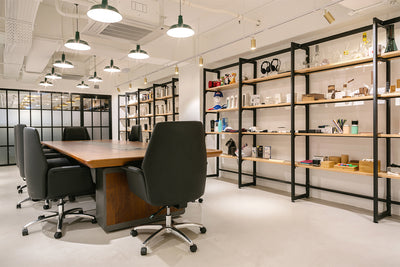
Platforms like Efashion Paris, Paris Fashion Shops, and Ankorstore have built real infrastructure for French buyers. Efashion Paris, for example, has been operating since 2011 and now connects buyers with over 600 fashion suppliers and more than 100,000 products, with orders typically shipped within 48 hours. Ankorstore, founded in Paris in 2019, connects over 25,000 brands with 300,000+ verified retailers across 23 European countries and offers flexible payment terms of up to 60 days for retailers.
The appeal is obvious: low friction, fast delivery within France (typically 24–48 hours via DPD or UPS), no minimum order commitments that run into thousands of units, and no need to manage factory relationships across time zones. Paris Fashion Shops sets minimum orders as low as €50–€150 per supplier, which means a brand can test multiple styles without significant capital exposure.
But the trade-off is structural. Every product on these platforms is also available to your competitors. You are buying the same ready-made stock that dozens of other French boutiques and e-commerce stores are ordering. Differentiation on product is essentially impossible — your only levers are pricing, photography, and customer experience. For a brand trying to build a recognizable identity around custom merchandise, that’s a ceiling, not a floor.
European wholesale also carries a cost premium. Labor costs in Western and Southern Europe are substantially higher than in Southeast Asia, and that difference flows directly into wholesale unit prices. French professional buyers also face 20% VAT on domestic orders, which is recoverable at year-end but affects cash flow in the interim. The per-unit economics rarely support the kind of margin stacking that a growing e-commerce brand needs to invest in marketing and growth.
Pros of European Wholesale Platforms:
- Fast delivery (24–72 hours within France)
- Low or no MOQ per order
- No factory management required
- Flexible payment terms on some platforms
- EU regulatory compliance built in
Cons of European Wholesale Platforms:
- No product exclusivity — competitors access the same catalog
- Higher unit costs than Asian OEM production
- Zero branding control over product design, materials, or packaging
- Limited to existing styles; no custom development
- 20% VAT applies to French professional buyers ordering domestically
What OEM Manufacturing Actually Delivers
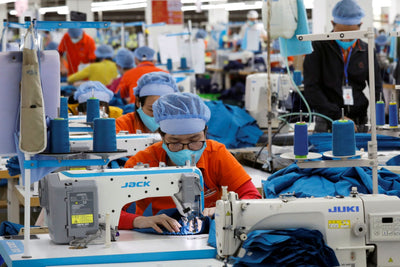
OEM — Original Equipment Manufacturing — means a factory produces goods built entirely to your specifications: your design, your materials, your branding, your packaging. You own the product concept. The manufacturer executes it.
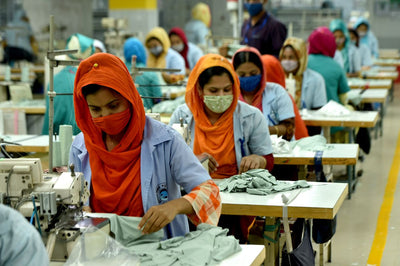
The majority of OEM apparel production sits in East and Southeast Asia. Bangladesh, Vietnam, China, and India each serve distinct cost and capability profiles. Bangladesh, for instance, holds a notable tariff advantage for US-bound goods and has attracted major global retailers for cost-effective basics production. Vietnam is gaining ground for EU- and US-bound sustainable collections. The cost differential versus European manufacturing is significant: even Portugal — the most affordable Western European option — is not cost-competitive with Asia on any metric except speed to the EU market and minimum order size.
For a French e-commerce brand, the OEM route opens up what wholesale cannot: a product that is yours alone. Custom colorways, branded labels, proprietary silhouettes, custom packaging inserts — none of that exists on a wholesale platform. That exclusivity is what allows brands to build defensible positioning and, critically, charge prices that reflect brand value rather than commodity availability.
The honest trade-offs are lead time and upfront capital. Full custom OEM manufacturing typically requires 8–20 weeks from design approval to delivery, depending on complexity and factory location. Minimum order quantities for fully custom work often start at 300–500 pieces per style, though some manufacturers offer lower thresholds for certain product categories. Cash is tied up longer, and inventory risk is real — particularly for brands still validating demand.
Quality control is the other variable. Without on-site inspection, defect rates and consistency issues can erode the economics of an otherwise well-priced order. This is where the choice of manufacturing partner matters as much as the choice between OEM and wholesale.
Pros of OEM Manufacturing:
- Full product exclusivity — your design, your brand
- Lower unit costs at volume compared to European wholesale
- Control over materials, construction, and packaging
- Scalable: production grows with your order volume
- Ability to develop proprietary product lines
Cons of OEM Manufacturing:
- Longer lead times (8–20 weeks typical for full custom)
- Higher upfront capital commitment
- Requires active supplier management and quality oversight
- MOQ thresholds can be a barrier for early-stage brands
- Import logistics and customs clearance add complexity
Side-by-Side Comparison
| Factor | European Wholesale Platforms | OEM Manufacturing (Asia) |
|---|---|---|
| Unit Cost | Higher (EU labor rates) | Lower at volume |
| Branding Control | None — stock products only | Full — your design, labels, packaging |
| Product Exclusivity | None | Complete |
| Lead Time | 24–72 hours in France | 8–20 weeks |
| Minimum Order | €50–€150 per supplier | 300–1,000+ units per style |
| Customization | Not available | Fully available |
| Capital Requirement | Low | Medium to high |
| Quality Control | Supplier-managed | Buyer-managed (or via partner) |
| Regulatory Compliance | EU-standard by default | Requires verification |
| Scalability | Limited by supplier catalog | High — scales with volume |
| Margin Potential | Compressed (commodity pricing) | Strong at scale |
The table makes the trade-off visible: wholesale wins on speed and simplicity; OEM wins on brand ownership and margin. Neither is wrong. They serve different stages of a brand’s development.
When Each Route Makes Sense — and When to Switch
A French e-commerce brand launching its first season with limited capital and unvalidated demand probably benefits from starting with European wholesale. The low commitment, fast restocking, and minimal inventory risk allow for market testing without betting the business on a custom production run. Platforms like Ankorstore’s flexible 60-day payment terms make this even more accessible.
But wholesale has a natural ceiling. Once a brand has validated which product categories sell, which price points work, and what its customers actually respond to, continuing to source from shared catalogs means capping growth. Every competitor can undercut you with the same product. Differentiation shifts entirely to price — a race that rarely ends well for smaller brands.
The switch to OEM typically makes sense when a brand is ordering the same SKU repeatedly and at sufficient volume to justify a custom run, or when the product itself is the brand’s primary differentiator. Custom headwear, branded tote bags, private-label apparel — these are categories where OEM production pays for itself in margin expansion and customer loyalty within a few seasons.
The transition doesn’t have to be binary. Many brands run a hybrid model: wholesale for fast-moving basics and trend-driven pieces with short shelf lives, OEM for hero products that define the brand’s identity and carry higher margins. That split lets a brand maintain agility while building the proprietary product foundation that wholesale alone cannot provide.
For French e-commerce brands targeting differentiation in a crowded market — where mobile commerce accounts for roughly 70% of fashion e-commerce sales and competition from cross-border platforms like Shein and Temu is intensifying — owning your product design is increasingly a strategic necessity, not a luxury.
Choosing an OEM Partner: What to Actually Evaluate
The OEM manufacturing landscape is wide, and the quality of partners varies considerably. For French e-commerce brands new to direct manufacturing, a few criteria matter more than others.
On-site quality control is probably the single most important factor. Defect rates that look small on paper — 3–5% — translate into real customer return costs and brand reputation damage at scale. Partners who employ dedicated QC inspectors at the factory, rather than relying on self-reported compliance, offer substantially better risk management.
Responsiveness and quoting speed signal operational maturity. A manufacturer who takes two weeks to return a quote is likely to have similar lag times throughout production. For brands managing seasonal inventory cycles, that friction compounds.
Multi-country production capability matters for supply chain resilience. A partner with factories across Bangladesh, Vietnam, and China can route production based on cost, tariff environment, and lead time requirements — rather than being locked into a single geography.
Headwind Group, a Hong Kong-based OEM manufacturer operating since 1980, is one example of a partner built specifically for this kind of work. With factories and offices in Bangladesh, Vietnam, Myanmar, India, and China, Headwind provides 24-hour quotes and maintains over 30 on-site QC inspectors across Asia — a meaningful operational commitment for brands that can’t afford to fly to factories themselves. Their custom apparel manufacturing and headwear production capabilities span a range of categories relevant to fashion merchandise brands, and a 100% replacement guarantee removes the tail risk that makes first-time OEM buyers hesitant.
For French e-commerce brands specifically, the ability to get a detailed quote within 24 hours — and samples within 2–3 weeks — compresses the evaluation timeline considerably, which matters when you’re trying to plan seasonal launches without locking up capital prematurely.
The Honest Recommendation
If you are sourcing generic stock to test a market, European wholesale platforms are the right tool. They are fast, low-risk, and well-suited to early-stage validation. Platforms like Efashion Paris and Ankorstore exist precisely for this use case and do it well.
If you are building a brand with proprietary products, OEM manufacturing is the path that creates defensible value. The lead times are real, the capital requirements are real, and the supplier management overhead is real — but so is the margin expansion and the product exclusivity that wholesale simply cannot offer.
The French fashion e-commerce market is growing, but it is also getting more competitive. Cross-border platforms are compressing prices on generic merchandise. The brands that will hold margin and build loyalty are the ones whose products cannot be found anywhere else. That is an OEM problem, not a wholesale problem — and recognizing which problem you are actually solving is the most useful thing this comparison can offer.