8 Things to Look for When Buying Custom Embroidered Hats in Bulk for a Canadian E-Commerce Store
The Supplier Decision Most Canadian Brands Get Wrong
Ordering a sample hat and being happy with it is not the same as being ready to place a 500-piece bulk run. Canadian e-commerce brands make this mistake constantly—they approve a prototype, place the order, and then receive goods with inconsistent stitching, off-brand thread colors, or embroidery that puckers after the first wash. The problem is almost never the hat itself. It’s the supplier evaluation process that happened before anyone placed a single order.
This checklist covers eight things worth scrutinizing before you commit to a bulk run of custom embroidered headwear. Some of these are technical. Some are logistical. All of them matter more than the price per unit.
1. Thread Quality and Fiber Type
Not all embroidery thread performs the same way on headwear, and the difference becomes obvious after a few months of product sitting in a customer’s closet or going through regular washing cycles. Polyester thread is the industry standard for a reason—it offers strong colorfastness and holds up well through repeated wash cycles. Rayon thread is sometimes used because it’s cheaper and has a slight sheen, but it tends to fade faster under UV exposure and loses integrity in humid conditions.
For Canadian e-commerce brands selling into markets that see real weather—which is most of Canada—thread durability matters. Ask your supplier which thread brand they use and whether they can provide technical specs or wash-test data. A supplier that can’t answer this question clearly is probably not running a tight enough production operation to trust with a bulk run.
Metallic threads are a separate category worth understanding. They work well for limited-edition designs or premium merch drops, but they require slower machine speeds and more careful digitizing to avoid fraying at the needle. If your design calls for metallic elements, make sure the supplier has specific experience running those threads at volume—not just on samples.
2. Digitizing Standards and File Ownership
Digitizing—the process of converting your artwork into a machine-readable stitch file—is where most quality problems originate. A poor digitizing job produces embroidery that looks slightly off even when the thread and hat are both good. Common issues include pull compensation that’s set too aggressively (causing the design to look compressed), stitch densities that are too high for the fabric weight (causing puckering), and small text that becomes illegible because the digitizer didn’t simplify it appropriately.
A typical logo might use anywhere between 5,000 and 15,000 stitches depending on size and complexity, and the digitizer’s decisions about stitch paths, densities, and fill types determine whether that logo looks clean or muddy on the finished hat. Ask to see a test sew-out on the actual hat style before approving production. Digital mockups are useful for color direction but they do not show how a design will actually behave on fabric.
Also clarify who owns the digitized file. Some suppliers treat the DST file as their intellectual property, which means you’ll pay a new digitizing fee every time you reorder or switch suppliers. For a Canadian brand building a long-term product line, owning your stitch files is worth negotiating upfront.
3. MOQ Flexibility and Per-Colorway Minimums
Minimum order quantities in custom headwear are not always what they appear. A supplier might advertise a 144-piece MOQ but apply that minimum per colorway, which means a three-color hat run becomes a 432-piece commitment before you’ve tested whether any of those colorways sell.
For e-commerce brands in Canada that are still validating their product-market fit, this matters a lot. Tying up capital in 400 unsold hats is a real business risk. The smart approach is to ask specifically: what is the MOQ per design, per colorway, and per decoration location? Then ask what the unit price curve looks like—how much does the per-unit cost drop at 300 pieces versus 500 versus 1,000?
Headwind Group’s MOQ of 144 pieces offers meaningful flexibility for brands that want to test new designs or colorways without overcommitting inventory. That kind of entry point lets a Canadian retailer run a limited drop, read the data, and reorder with confidence rather than guessing at volume.
4. On-Site Quality Control—Not Just End-of-Line Inspection
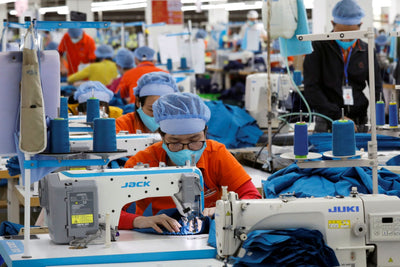
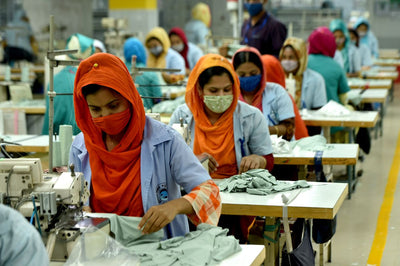
There is a meaningful difference between a supplier who does a visual check before boxing up your order and one who has trained QC inspectors on the production floor catching problems as they happen. End-of-line inspection finds defects after they’ve already been replicated across hundreds of units. In-process inspection—checking tension, thread breaks, registration accuracy, and stitch consistency during the run—prevents those defects from compounding.
For Canadian brands ordering from Asian manufacturers, this distinction is especially consequential because you’re not on the ground to catch issues yourself. You’re relying entirely on the supplier’s internal systems. Ask specifically: how many QC inspectors do you have, where are they located, and at what production stages do they inspect?
Headwind Group has over 30 quality-control inspectors stationed across its Asian production facilities, managing on-site inspection throughout the manufacturing process—not just at the point of shipment. That kind of embedded QC infrastructure is harder to fake than a certificate and more reliable than a third-party audit that happens once a year. Combined with a 100% replacement guarantee, it gives Canadian buyers meaningful protection on bulk runs.
5. Sample Lead Times and Pre-Production Approval Process
A supplier’s sample turnaround time tells you a lot about how their production floor is organized. A factory that takes eight weeks to produce a pre-production sample is probably not going to hit a four-week production window when your bulk order is in queue behind twenty others.
For custom embroidered headwear, the pre-production sample process should include at minimum: a digital proof for color and placement approval, and a physical sew-out on the actual hat style and fabric. The physical sample is non-negotiable for bulk orders. It’s the only way to verify that the digitizing translates correctly to the specific hat construction you’ve chosen, and that the thread colors match your brand standards under real lighting conditions—not just on a screen.
Headwind Group’s sample lead time runs 1–2 weeks on average, with production lead times of 2–6 weeks depending on order size and complexity. For Canadian e-commerce brands planning seasonal drops or promotional campaigns, that kind of predictable timeline makes inventory planning significantly easier.
6. Country of Origin and Canadian Import Duty Implications
Where your hats are manufactured directly affects your landed cost in Canada. Canada’s MFN (Most Favoured Nation) tariff on imported apparel typically runs between 16% and 18%, plus a 5% GST on the duty-paid value. For brands that can source from countries Canada has active free trade agreements with—including members of the CPTPP—duties can potentially be reduced significantly.
Bangladesh is worth particular attention here. It is currently the leading exporter of clothing to Canada by value, and Canadian importers sourcing from Bangladesh can often access preferential tariff treatment. Headwind Group operates a joint-venture factory in Bangladesh specifically, and for US-based brands, Bangladesh-manufactured caps also carry a tariff advantage compared to Chinese-origin goods.
The practical implication for Canadian e-commerce brands: before you lock in a supplier, ask for the country of origin for each product category and run the numbers on your landed cost including duties, GST, and freight. A lower FOB price from a supplier in a higher-tariff country can easily become a more expensive product by the time it clears Canadian customs.
7. Shipping Timelines and Logistics Transparency
Ocean freight from Asia to Canadian ports is not a fixed number. Transit from Shanghai or Shenzhen to Vancouver typically runs 15 to 28 days port to port, and shipments moving onward to Toronto or Montreal via rail add another 10 to 15 days to that window. Air freight cuts transit to roughly 3 to 5 days airport to airport, but at a cost that erodes margin on lower-ticket items like headwear.
What Canadian brands often underestimate is the total timeline: production lead time plus ocean transit plus customs clearance plus inland delivery. A supplier that quotes you a six-week production window and you assume that means hats in hand in six weeks is going to miss your launch date.
Ask your supplier for a full timeline breakdown: production start to factory departure, then departure to port of entry, then estimated customs clearance time. Also ask whether they have experience shipping to Canadian addresses specifically—CBSA documentation requirements differ from US Customs, and suppliers who primarily serve the US market may not be fluent in Canadian import paperwork.
8. Replacement Guarantee and Defect Resolution Policy
Bulk orders produce defects. The question is not whether any defective units will exist in a 500-piece run—some number almost always will—but what the supplier will do about them when they do.
Get the defect resolution policy in writing before you place an order. Specifically: what is the acceptable defect rate, who bears the cost of replacement units, and what documentation do you need to provide to trigger a replacement? Some suppliers will offer a credit toward a future order; others will replace defective units outright. These are meaningfully different outcomes for a Canadian brand that needs to fulfill existing customer orders.
Headwind Group backs its headwear with a 100% replacement guarantee—if the product doesn’t meet quality standards, it gets replaced at no charge. For a Canadian e-commerce operation managing inventory across multiple SKUs, that kind of policy removes a significant layer of financial risk from the supplier relationship.
The eight factors above won’t guarantee a perfect bulk order, but they will dramatically reduce the probability of a costly one. Most supplier problems are predictable if you ask the right questions before the order is placed—and most of those questions are on this list.