7 Mistakes to Avoid When Launching a Custom Branded Merchandise Line for Your Online Store
The Gap Between a Great Idea and a Sellable Product
Launching a custom branded merchandise line sounds straightforward until the first shipment arrives. The hats are a slightly different shade of navy than the mockup. The tote bags have a logo that’s 30% smaller than approved. A handful of units are defective. Now you’re absorbing the cost of a product you can’t sell, a customer service problem you didn’t anticipate, and a reorder timeline that blows your launch window.
This scenario plays out regularly for new e-commerce brands — not because they chose bad products, but because they didn’t know what they didn’t know about the sourcing process. The mistakes below are the ones that show up most often, and most expensively, when brands try to go from idea to inventory without a solid manufacturing partner in their corner.
## Mistake 1: Choosing a Supplier Based on Price Alone
The lowest quote is almost never the lowest total cost. Cheap unit pricing tends to come with thinner materials, less rigorous quality checks, and suppliers who cut corners mid-production to protect their margins once the order is confirmed. By the time defective units arrive at your warehouse, the savings have evaporated — and you’re also dealing with customer returns, negative reviews, and a delayed restock.
A more useful filter when evaluating suppliers: ask about their defect rate, their inspection process, and what happens when something goes wrong. A manufacturer that offers a 100% replacement guarantee on defective goods is telling you something meaningful about how they operate. That kind of commitment only makes sense if quality control is already embedded in the process — not bolted on as an afterthought.
## Mistake 2: Skipping the Pre-Production Sample Stage
Digital mockups are useful for visualizing a concept. They are not a substitute for a physical sample. Colors shift between screen and fabric. Embroidery thread behaves differently on a structured cap than it does in a flat design file. A logo that reads well at 300dpi on a monitor can look muddy when printed on a matte surface at small scale.
Brands that skip physical samples to save time or money tend to pay for it in bulk. Approving a production run without a physical sample in hand means you’re betting your entire inventory budget on assumptions. Request a sample before committing to any meaningful volume — and treat that sample as the binding quality standard for everything that follows. Some manufacturers can turn around custom samples in two to three weeks, which is a reasonable investment given what’s at stake.
## Mistake 3: Underestimating Lead Times
Garments and bags sourced from Asia typically require 45 to 75 days from sample approval to shipment — and that window doesn’t include ocean freight, which adds another two to five weeks depending on the destination port. Brands that plan their launch date first and work backwards rarely leave enough buffer for production delays, public holidays, or customs holds.
The mistake isn’t just cutting it close. It’s that compressed timelines force bad decisions: accepting a sample that’s almost right, skipping mid-production inspections, or choosing air freight at three to four times the cost of sea shipping just to hit a date. Build your sourcing timeline with realistic production windows baked in, and add at least two weeks of buffer for anything that can go wrong in transit.
## Mistake 4: Ignoring On-Site Quality Control
A factory’s internal QC team works for the factory. That’s not a criticism — it’s just the reality of where their incentives point. Independent, on-site inspection is what actually protects your order.
The most common version of this mistake: a brand approves a sample, places the order, and then has no visibility into production until the goods arrive at their warehouse. By that point, if there’s a problem — inconsistent stitching, off-spec hardware, color variation between units — the options are limited and expensive. Pre-shipment inspections catch these issues while there’s still time to fix them.
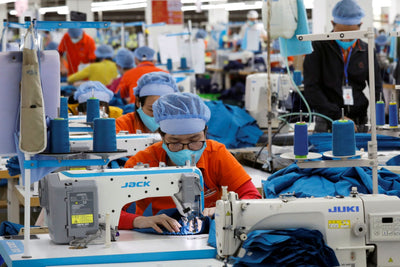
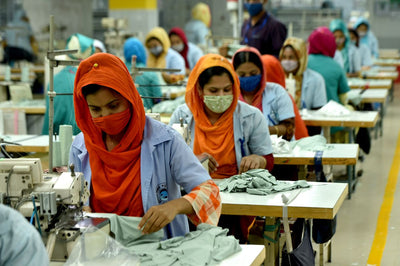
This is one area where working with a manufacturer that has dedicated QC infrastructure makes a significant difference. Headwind Group operates with over 30 on-site quality control inspectors across Asia, embedded at factories in Bangladesh, Vietnam, Myanmar, India, and China. That kind of coverage means problems surface during production — not after the container has left the port.
## Mistake 5: Treating All Product Categories the Same
A custom baseball cap and a custom insulated tote bag are not the same sourcing problem. The materials, construction techniques, decoration methods, and compliance requirements differ meaningfully. Brands that source everything through a single generalist supplier often end up with products that are adequate but not optimized — the cap fits loose, the bag’s zipper feels flimsy, the drinkware leaks at the seal.
Category-specific manufacturing expertise matters. A factory that specializes in headwear understands crown construction, sweatband materials, and brim stiffness in a way that a general apparel factory doesn’t. Similarly, a manufacturer with deep experience in bags and coolers will catch design issues that a generalist would miss entirely. When building out a merchandise line across multiple product types, it’s worth working with a partner that has genuine depth across categories rather than surface-level capability across all of them.
## Mistake 6: Neglecting Compliance and Labeling Requirements
US e-commerce brands selling physical goods are subject to labeling, safety, and import compliance requirements that vary by product category. Apparel needs fiber content and country-of-origin labels. Drinkware sold for food contact may need to meet FDA or California Prop 65 standards. Toys carry their own set of CPSC regulations. Brands that don’t build compliance into the sourcing conversation from the start often discover these gaps at the worst possible moment — during customs clearance, or after a customer complaint.
This is especially common when brands source opportunistically from online marketplaces without verifying that the supplier can actually produce compliant documentation. Asking for certifications, audit records, and labeling specs before placing an order is not overcautious — it’s standard practice for any brand that expects to scale.
## Mistake 7: Having No Plan for When Things Go Wrong
Something will go wrong. Not always, not catastrophically, but often enough that brands without a recovery plan end up absorbing costs they shouldn’t have to. A production run comes in 8% defective. A shipment is delayed three weeks. A colorway doesn’t match the approved standard.
The question isn’t whether problems will occur — it’s what happens next. Brands that work with manufacturers who have a clear defect resolution policy are in a much stronger position than those who have to argue about liability after the fact. A 100% replacement guarantee isn’t just a marketing claim; it’s a structural commitment that changes how both sides approach quality from the beginning.
For e-commerce brands building a merchandise line in 2026, the sourcing partner matters as much as the product itself. Headwind Group has spent over 45 years manufacturing headwear, bags, apparel, and drinkware for brands across the US, with apparel and accessories built to spec and backed by on-site inspection at every stage. Getting a quote takes 24 hours. Getting the product right takes a partner who’s done it thousands of times before.