7 Custom Branded Merchandise Products That Sell Best on E-Commerce Stores (And How to Source Them)
The Products That Actually Move
Selling custom branded merchandise online is not complicated in concept, but the execution separates stores that grow from ones that stall. The first decision — what to sell — matters more than most new store owners expect. Pick the wrong category and you’re fighting for margin on products that ship heavy, return often, and photograph badly. Pick the right one and you’ve got repeat buyers, strong AOV, and a product that markets itself every time someone walks out the door wearing it.
The seven categories below are ranked by a combination of factors: conversion rates on Shopify stores, sourcing simplicity, margin potential, and how well they hold a brand’s visual identity. Each one has a clear path to OEM manufacturing — meaning you’re not relying on print-on-demand unit economics forever, but building toward a product line you actually own.
1. Custom Headwear
Caps and hats sit at the top of this list for a reason. The global headwear market reached $23.1 billion in 2024, and branded headwear has been a staple of promotional merchandise for decades because it works. Caps and hats have long been a staple in promotional wear, and their success lies in their practicality and universal appeal. The branding surface is small but highly visible — a logo on the front panel of a structured cap gets seen at eye level, all day, in public.
From a sourcing standpoint, headwear is one of the most developed OEM categories in Asia. Headwind Group, a manufacturer with over 45 years of experience, operates a joint-venture factory in Bangladesh specifically built for headwear production. Headwind has established itself as a leading baseball cap manufacturer over the past 40 years, specializing in producing caps designed for corporate branding, promotional events, and uniform requirements. Their MOQ starts at 144 pieces — accessible for a growing e-commerce brand — and for businesses currently sourcing from China, Bangladesh offers a cost-effective and proficient alternative, with the added benefit of tariff-free caps, providing significant cost savings for US customers.
Beyond baseball caps, bucket hats and beanies continue to perform across different seasons and demographics. Caps protect from the sun and add a casual style element, making them popular for daily wear, and they suit all genders and age groups, broadening the target market. For e-commerce brands, that broad appeal is worth a lot — you’re not building a SKU for one segment, you’re building one that travels.
2. Branded T-Shirts and Apparel
Clothing items — especially t-shirts, hoodies, and custom apparel — make up 39.7% of the entire global print-on-demand market. That number doesn’t capture OEM volume, which is considerably larger, but it illustrates where consumer demand sits. People buy branded shirts. They wear them. They gift them. The category has a repeat-purchase logic that few others match.
Custom t-shirts remain the top-selling items year after year. From men’s and women’s cuts to unisex t-shirts, there’s a tee for every target audience — ideal for casual wear, branded merchandise, or event-specific designs. Hoodies follow closely behind, and for good reason: customers often view hoodies as higher quality than basic t-shirts, justifying a higher price point, and large printing areas on the front and back allow for bold branding.
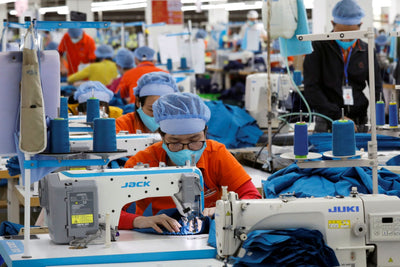
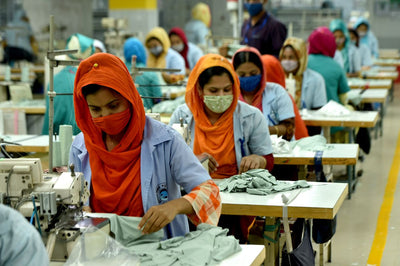
For brands moving beyond print-on-demand into true OEM, Bangladesh is now the primary sourcing destination for US retailers. For 45 years, Headwind has carved a niche in the global t-shirt manufacturing industry through a steadfast dedication to quality, serving as a leading t-shirt supplier in Bangladesh to embroiderers, decorators, brands, and retailers across the globe. Headwind’s apparel manufacturing capabilities cover tees, hoodies, and accessories — with 30+ on-site quality-control inspectors across Asia managing production at scale.
3. Tote Bags and Backpacks
Tote bags have surged in popularity as a functional and stylish merchandise item. What makes them particularly attractive for e-commerce is the combination of low production cost, high visual real estate, and daily utility. Print-on-demand tote bags are the ultimate sidekick for eco-conscious shoppers — perfect for daily errands, beach days, or carrying books to a café.
But tote bags are just the entry point. Backpacks, drawstring bags, and cooler bags all carry strong margins and high perceived value. The bag category probably has the widest range of price points of any merchandise type — a simple cotton tote sits at one end, a structured laptop backpack at the other, and both carry a brand’s identity effectively.
Sourcing bags through an OEM partner gives you control over fabric, hardware, zipper quality, and interior layout — details that print-on-demand platforms can’t touch. Headwind’s bag manufacturing operation produces totes, backpacks, and cooler bags from factories across Bangladesh and Vietnam, with full-turn-key solutions that include compliance documentation — useful for brands selling into retail channels as well as direct-to-consumer.
4. Custom Drinkware
Custom mugs, tumblers, and water bottles are evergreen bestsellers in the customizable products space, with consistent year-round demand and significant spikes during holidays and gift seasons. The margin profile is strong: the low production cost per unit and broad appeal make drinkware ideal for high-volume sales, and a custom tumbler costing $6–$10 to produce can sell for $25–$35.
Drinkware also benefits from a sustainability narrative that resonates with US consumers. Offering reusable bottles aligns brands with environmental responsibility — a positioning that commands a premium and builds loyalty. For store owners, this is a category that works as a standalone product and as a bundle with apparel or headwear.
Headwind has a documented case study of manufacturing hydration water bottles for a client whose products were sold into Target and other major US retailers — a signal that the production quality meets retail-grade standards, not just promotional minimums.
5. Custom Hoodies and Sweatshirts
Hoodies deserve their own entry, separate from the broader apparel category, because the economics are different. The global custom sweatshirts and hoodies market generated over $3.5 billion in revenue in 2024. They sell year-round — heavier weight in fall and winter, lighter fleece in spring — and they tend to generate higher average order values than tees.
From trendy streetwear to event merchandise, custom hoodies sell well across all demographics — students, sports teams, and fashion-forward shoppers alike. For brands targeting a younger US audience, a quality branded hoodie is often the product that converts a one-time buyer into a repeat customer. The emotional attachment people form with a good hoodie is genuinely different from a t-shirt.
The sourcing consideration here is fabric weight and construction. Cheap fleece shows immediately — pilling, shrinkage, and uneven printing are common problems with low-cost suppliers. Working with an established OEM manufacturer who can specify fabric composition and GSM (grams per square meter) before production starts is the difference between a product that builds brand equity and one that generates returns.
6. Tech Accessories
From trendy custom t-shirt designs to functional tech accessories, branded merchandise allows your audience to interact with your brand in a tangible way. Tech accessories — phone cases, cable organizers, wireless chargers, and branded earbuds — carry strong margin potential and high perceived value relative to production cost.
Accessories are often easier to merchandise, bundle, and upsell than larger-ticket items, making them an attractive entry point for many online stores. For a brand already selling headwear or apparel, adding a tech accessory to the catalog creates a natural upsell opportunity — the kind that lifts AOV without requiring a new customer acquisition.
Sourcing tech accessories through an OEM partner in China or Vietnam gives access to a wider component ecosystem than domestic alternatives. Headwind’s sourcing teams operate across China, Bangladesh, Myanmar, Vietnam, and India, which means they can coordinate multi-category production — useful when a brand wants to launch headwear and tech accessories in the same order cycle.
7. Branded Outdoor and Promotional Accessories
This is the broadest category on the list, but it’s worth including because it consistently outperforms expectations for e-commerce brands targeting outdoor, sports, or lifestyle niches. Branded beanies, bucket hats, visors, and cold-weather sets all fall here — and so do items like branded lanyards, patches, and keychains that serve as add-ons or loyalty gifts.
Businesses are heavily investing in custom-branded promotional items. The top-selling products are low-cost, high-volume items like packaging, wristbands, and keychains, which are used for brand visibility, events, and employee gifts. For e-commerce brands, these items work particularly well as order inserts or free-gift-with-purchase incentives — low cost to produce, high perceived value to receive.
Sustainability has become a major factor in merchandise choices, and this category has responded. Recycled polyester beanies, organic cotton bucket hats, and RPET tote bags are all producible through OEM partners with the right certifications. Headwind’s Bangladesh factory stocks certified non-Chinese cotton and maintains compliance documentation for brands that need to demonstrate sourcing transparency to their customers.
How to Actually Source These Products
The mechanics of sourcing custom branded merchandise are simpler than most new store owners expect, but the details matter. Here’s what the process looks like when working with a direct OEM manufacturer:
Step 1 — Send your design brief. A good OEM partner will return a quote within 24 hours. Headwind does this as standard — you submit product specs and receive a quote the same business day, which is faster than most domestic decorators.
Step 2 — Approve a sample. Physical samples typically take 1–3 weeks depending on the product category. This is the stage where fabric, construction, print quality, and fit are confirmed before bulk production begins.
Step 3 — Production and QC. Headwind has over 30 quality-control inspectors across Asia who manage on-site inspection of goods to ensure quality standards are met. For US brands, having inspectors physically present at the factory — rather than relying on third-party audits — reduces the risk of receiving a shipment that doesn’t match the approved sample.
Step 4 — Delivery to your warehouse or 3PL. After passing quality-control inspection, Headwind manages delivery of goods to your warehouse or 3PL. For Shopify brands using fulfillment partners like ShipBob or similar, this integration is straightforward.
Customers are also becoming more thoughtful about what they buy — about 49% say they’re willing to spend more on sustainable brands, and 48% don’t mind waiting longer for something custom-made. That last data point matters for sourcing decisions: the production lead time of OEM manufacturing (typically 4–8 weeks) is acceptable to a meaningful share of buyers, especially when the product quality is visibly better than what print-on-demand delivers.
The brands that build durable merchandise businesses in 2026 are the ones treating sourcing as a strategic asset, not an afterthought. Owning your product spec, working with a manufacturer who has QC infrastructure on the ground, and choosing categories with proven demand — that’s the formula. The seven categories above are where the demand already exists. The sourcing partner question is the one worth solving next.
Final Thought on Category Selection
One practical note before you commit to a category: the products that sell best are usually the ones the store owner is genuinely interested in. Headwear brands that started because the founder loved caps tend to develop better product instincts than those that picked caps because a listicle said to. The market data above confirms which categories have demand. Your job is to pick one, source it well, and build the kind of product page that makes the choice obvious for the buyer.
Pricing strategy directly affects how much profit is retained per order. E-commerce businesses that compete solely on price often face shrinking margins, while brands that build perceived value through branding, bundling, or differentiation can sustain higher profit margins. Custom branded merchandise, by definition, is a differentiation play. The logo, the colorway, the packaging — these are what justify the price premium over a generic alternative. Source it right, and the margin follows.