5 Best OEM Apparel and Accessories Manufacturers Serving Germany-Based Retailers in 2026
Why German Retailers Are Rethinking Their Sourcing Partners
German retailers sourcing private-label apparel and accessories face a specific set of pressures that buyers in other markets often don’t. Domestic production in Germany tends toward technical textiles and industrial garments—high precision, but expensive and constrained in capacity. As one sourcing guide puts it, clothing manufacturing in Germany is costly due to “high domestic labor wages, strict environmental regulations, and a heavy industry focus on specialized textiles rather than mass-market fashion apparel.” That forces most German fashion and retail brands—whether a Berlin streetwear label or a Munich corporate-wear supplier—to look beyond the border.
The result is a sourcing landscape that spans Serbia, Turkey, Portugal, India, and Asia. Each geography has a different MOQ floor, lead time profile, certification stack, and approach to quality control. Picking the wrong partner costs more than just money—it costs time, inventory risk, and brand credibility.
This list evaluates five manufacturers that German-based retailers can realistically work with in 2026, based on MOQs, lead times, certifications, product range, and shipping logistics. They’re not all the same type of partner, and that’s the point.
1. Headwind Group — Best for Multi-Category OEM with Ironclad Quality Guarantees
Headquarters: Hong Kong | Production: Bangladesh, Vietnam, China, Myanmar, India
Best for: Retailers sourcing across multiple product categories—headwear, bags, apparel, and accessories—who want a single accountable partner with deep Asia-Pacific infrastructure.
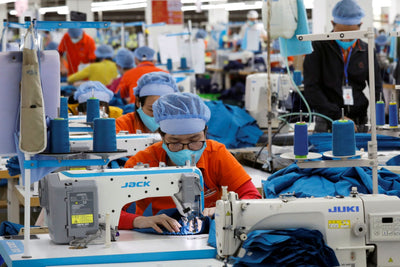
Headwind Group has been manufacturing since 1980, and the operational footprint shows it. With offices in Hong Kong, China, Vietnam, Bangladesh, and Myanmar, Headwind provides total turnkey manufacturing solutions from concept to delivery of the final product. The team includes over 100 merchandisers, engineers, quality control experts, and designers.
What separates Headwind from most Asia-based OEM manufacturers is the on-the-ground QC infrastructure. Over 30 quality-control inspectors across Asia manage on-site inspection of goods to ensure quality standards are met. For German retailers who can’t afford to fly a sourcing agent to Dhaka for every production run, that matters.
MOQ: Starting from 144 pieces for headwear; 1,000 pieces per color for apparel categories. Lead times: Sample lead time of 1–2 weeks; production lead time of 2–6 weeks for headwear. Quote turnaround: 24 hours. Quality guarantee: 100% replacement guarantee on defective goods.
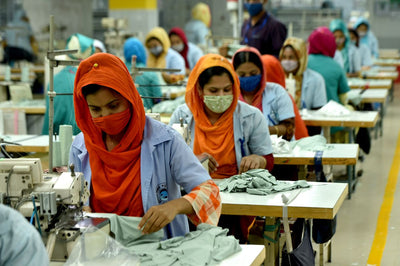
The Bangladesh operation deserves specific mention. Bangladesh is ahead of Vietnam and China for its price and tariff advantage, and Headwind’s joint-venture factory there handles everything from production to compliance to quality inspection. For German retailers shipping to EU customers, the cost savings on duties can be meaningful.
Product range spans apparel, bags, headwear, drinkware, tech accessories, and outdoor gear—which is useful for buyers who want consolidated production rather than managing five separate vendor relationships across Asia.
Certifications: Available on request; compliance management handled in-house by Bangladesh team. Shipping: Managed logistics to warehouse or 3PL; international freight coordinated by Headwind’s operations team.
2. FUSH — Best European Nearshore Option for Sustainability-Focused Brands
Headquarters: Serbia (Belgrade + Oraovica) | Production: In-house, two factories
Best for: German brands that need EU-adjacent production with verified sustainability credentials and are comfortable with a 500-piece MOQ floor.
FUSH has been manufacturing since 2005 and operates two factories in Serbia. Operating since 2005, FUSH has two factories in Europe, positioning them as an excellent nearshoring option for brands focused on reducing carbon footprint and improving CSR ratings. The Serbia-EU free trade agreement means that the only fee German buyers pay is the fixed customs clearance fee, which keeps landed costs predictable.
The certification stack is strong. FUSH holds ISO 9001:2015, ISO 14001:2015, ISO 45001:2018, GOTS, and GRS, and has passed the 4-pillar SMETA social responsibility audit through Sedex membership. In September 2021, their factory in south-eastern Serbia became 100% solar-powered. For German buyers whose end customers are asking sustainability questions at the shelf, that’s a story that’s easy to tell.
MOQ: 500 pieces per design per color. Sample lead time: 3–4 weeks (€100 per sample). Production lead time: Varies by order complexity; 10–30 days for activewear orders. Monthly capacity: Up to 100,000 pieces.
Their core specialization is activewear and sportswear, though they comfortably produce casual wear and streetwear including t-shirts, hoodies, and polo shirts. They also offer OEM, FPP (Full Package Production), CMT, dye sublimation, screen printing, and in-house fabric knitting—which shortens lead times because they’re not waiting on external fabric suppliers.
The 500-piece MOQ is a real constraint for startups, but for established German retailers running seasonal SKUs, it’s workable. FUSH also requires buyers to have a registered company with valid VAT and EORI numbers, which filters out informal buyers and keeps the client base professional.
3. Konsey Textile — Best Turkish Option for Low-MOQ Basics and Casualwear
Headquarters: Izmir, Turkey | Production: In-house
Best for: German brands testing new SKUs or running smaller production batches, particularly in casualwear, knitwear, and basics.
Konsey Textile was founded in 1995 and draws on 40 years of combined textile industry experience from its founders. They cater to European and global brands with low MOQs starting at 100–200 pieces, which puts them in a different bracket from most Asian factories where sub-500 piece orders carry surcharges or get deprioritized.
Turkey’s geographic position gives Konsey a practical advantage for German buyers: strategically located at the crossroads of Europe and Asia, Turkey benefits from proximity to major markets, allowing for quick delivery and responsiveness to fashion trends. Transit times to Germany are typically far shorter than from Bangladesh or Vietnam.
MOQ: 100–200 pieces. Production capacity: 300,000+ pieces monthly. Certifications: GOTS-certified organic cotton, OEKO-TEX certified cotton for baby and children’s products. Specialties: Woven and knitted garments, activewear, casualwear, denim, luxury basics, bamboo clothing, organic cotton.
All production steps—from cutting to sewing, packaging, and controlling—are handled by their in-house employees, which keeps costs low. That vertical approach also reduces the coordination risk that comes with fragmented supply chains.
The trade-off is that Konsey is a strong generalist rather than a specialist. Their broad product range is useful for buyers who want flexibility, but brands needing highly technical or performance-driven garments may find the offering less differentiated. For basics, casualwear, and private-label everyday apparel, however, Konsey represents a practical, cost-accessible option for German retailers who want nearshore production without European price tags.
4. Shahi Exports — Best for High-Volume Casualwear and Workwear at Scale
Headquarters: Faridabad, India | Production: 50+ factories across 8 Indian states
Best for: Larger German retailers or buying groups sourcing high volumes of casualwear, workwear, or knitwear who need a vertically integrated supply chain.
Shahi Exports is India’s largest apparel manufacturer and exporter, operating 50+ manufacturing facilities and three textile mills across 8 Indian states, directly employing over 115,000 people. The scale is significant: Shahi produces 300 million garments annually, serving brands like H&M, Gap, Calvin Klein, Hugo Boss, and Inditex in 40+ countries.
For German retailers, the relevance is in Shahi’s European market experience. Shahi’s market engagement spans across various regions, including Asia, Europe, the Middle East, the United Kingdom, and the United Arab Emirates. The company has a documented track record of delivering large workwear and casualwear orders to European buyers.
MOQ: 500–2,000 pieces depending on category. Lead times: 30–60 days for standard orders. Certifications: ISO 9001, SA8000, Fair Trade, BSCI, ZDHC MRSL compliance. 100% of dyes and auxiliaries used in production adhere to ZDHC MRSL standards.
The sustainability position is increasingly credible. Shahi uses 30% recycled materials and has been investing in salt-free dyeing methods. In April 2026, Shahi announced a partnership with Innovo Fiber LLC to scale the Fibre52® cotton pretreatment technology across its integrated textile operations—a sign that the company is actively investing in next-generation sustainable production.
The practical limitation for smaller German buyers is MOQ and lead time. Shahi is built for volume, and orders below 500 pieces probably won’t get prioritized. But for a retailer moving 5,000+ units per SKU across a seasonal collection, Shahi’s vertically integrated supply chain—from spinning to finishing—delivers cost control that fragmented sourcing rarely matches.
5. ASBX — Best for Premium Streetwear and Small-Batch EU Production
Headquarters: Dongguan, China (brand) / Portugal (production) | Production: Portugal-based manufacturing
Best for: German e-commerce brands and boutique retailers sourcing premium streetwear, hoodies, and jersey basics in small batches with strong sustainability positioning.
ASBX is a leading Portuguese clothing manufacturer specialized in premium and luxury streetwear, with over 25 years of textile experience and a strong track record as a prime exporter serving over 100 export markets. Their MOQ is among the lowest in the premium European manufacturing space: 50–100 pieces per style/color for fully custom productions.
For German buyers, Portugal-based production offers EU-internal logistics with no customs complications, fast sampling, and the ability to make last-minute adjustments without the 12-week Asia turnaround cycle. European manufacturers offer faster proximity to EU markets, allowing shorter lead times, faster sampling, and easier last-minute adjustments.
MOQ: 50–100 pieces per style/color. Lead times: Typically 4–8 weeks from sample approval. Certifications: Focused on sustainable production techniques; GOTS-aligned practices. Specialties: Heavyweight hoodies (300–600gsm), premium T-shirts, sweatshirts, varsity jackets, cut-and-sew jersey.
ABSX also provides tech pack development and easy sample ordering—useful for German brands that are still refining their product line before committing to a full production run. They offer easy sample ordering and custom tech pack development.
The trade-off is cost. Portuguese production is meaningfully more expensive per unit than Bangladesh or Vietnam. For a brand selling at €80+ per hoodie, that margin works. For a retailer competing on price in the mid-market, it probably doesn’t.
How to Choose Between These Five
The right answer depends less on which manufacturer is “best” in the abstract and more on what your specific sourcing problem actually is.
If you need multi-category sourcing with consistent QC across headwear, bags, and apparel: Headwind Group is the clearest fit. The 24-hour quote, 30+ on-site QC inspectors, and 100% replacement guarantee address the three things that typically go wrong in Asia-based OEM—slow responsiveness, invisible quality problems, and no recourse when goods arrive defective. Their apparel manufacturing and bag manufacturing capabilities are particularly relevant for German retailers looking to consolidate vendor relationships.
If sustainability certification is a hard requirement and you want European production: FUSH is the most credible option, with ISO, GOTS, GRS, and SMETA all in place and a solar-powered facility to back up the claims.
If you’re testing a new SKU and need low MOQ with fast transit to Germany: Konsey Textile’s 100–200 piece floor and Turkish proximity make it the most accessible entry point.
If you’re moving high volumes of workwear or casualwear and need scale: Shahi Exports has the infrastructure and European market experience to handle it.
If you’re a premium e-commerce brand selling direct-to-consumer in Germany: ASBX’s EU-based production, low MOQs, and premium jersey quality align with a DTC brand’s need for speed and margin at lower volumes.
One thing worth noting: German buyers dealing with Asian manufacturers should factor in the EU’s evolving due diligence requirements under the Corporate Sustainability Due Diligence Directive (CSDDD). Partners with on-the-ground compliance infrastructure—like Headwind’s in-house Bangladesh compliance team or FUSH’s SMETA audit—will reduce the documentation burden as those requirements tighten through 2026 and beyond.